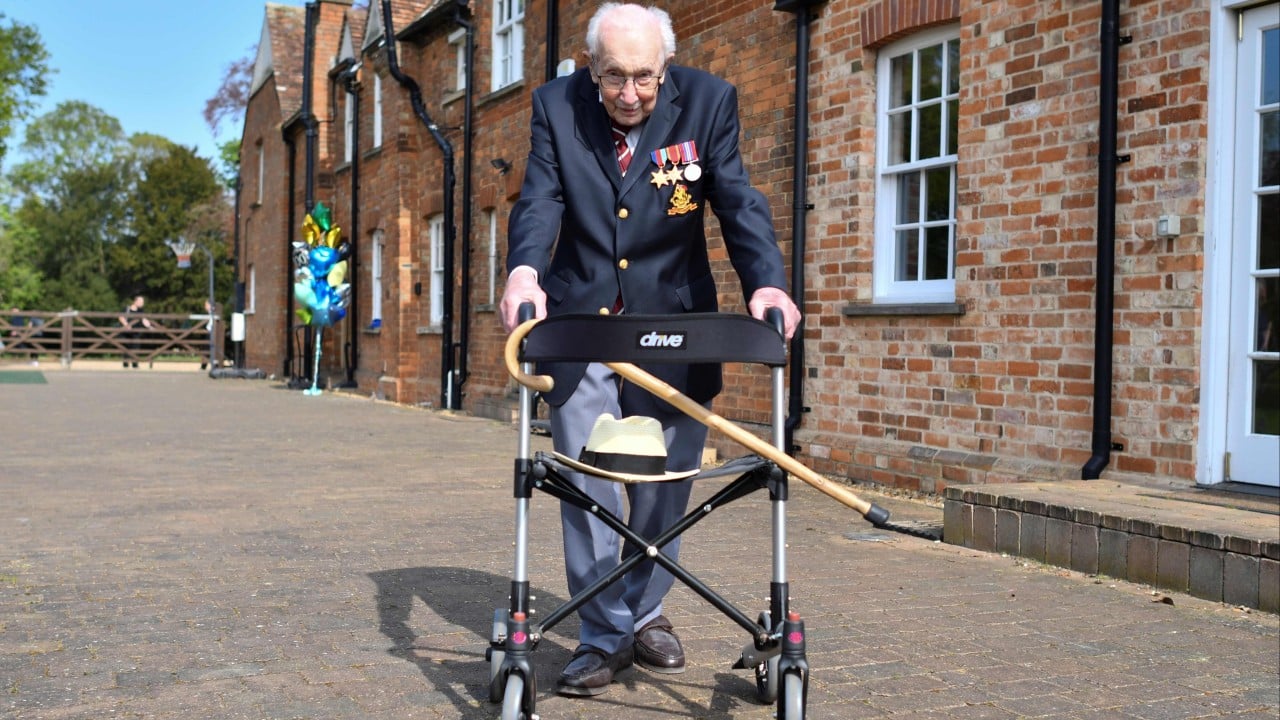
The former Captain Tom Foundation has applied to be removed from the companies register. Its filing records an application rather than completed dissolution. Captain Tom’s original NHS fundraising was separate from the charity investigated by the regulator.
What happened
The charity established in Captain Sir Tom Moore’s name has applied to be removed from the companies register. Companies House lists a voluntary strike-off application dated 27 November for the organisation now called the 1189808 Foundation.R1
The register describes the latest filing as an application, rather than a notice of completed dissolution. It also records the change from the Captain Tom Foundation name in January 2025; the Independent reports that the family requested the removal of Moore’s name.R1S2
Why it matters
The proposed closure concerns the foundation established after Moore’s fundraising became widely known during the pandemic. It does not concern the original garden-walking appeal, whose proceeds went to NHS Charities Together and were excluded from the Charity Commission inquiry.S2R2
The commission’s report records more than £38.9 million, including Gift Aid, raised by 30 April 2020. Moore completed 100 laps of his garden while recovering from illness. The foundation was incorporated separately on 5 May 2020.R2
The background
In November 2024, the commission published findings of repeated misconduct or mismanagement involving Moore’s daughter, Hannah Ingram-Moore, and her husband, Colin. It found that failures to manage conflicts between their family businesses and the charity had produced personal benefits for them.R3
The regulator also criticised other trustees for insufficient oversight, while saying the couple had not disclosed potential conflicts to them. Hannah was disqualified from charity trusteeship and senior management at any charity, rather than only the foundation bearing Moore’s name, for 10 years, and Colin for eight years, in June 2024.R3
The couple rejected the report’s treatment of them at the time. AP reported that they accused the commission of prejudgment and denied family misappropriation or unauthorised payments from the charity’s bank account.R4
Moore died in 2021 aged 100. He had been knighted by Queen Elizabeth II in July 2020 at an outdoor ceremony at Windsor Castle in recognition of his fundraising, according to the Independent.S2
What happens next
Government guidance sets out further steps after a strike-off application: Companies House checks the form and, if correctly completed, publishes a Gazette notice. If there are no objections, removal follows the two-month period specified in that notice, with a second notice marking the company’s legal dissolution.R5
The filing therefore does not establish a completed closure or a final dissolution date for the company’s removal from the register. Companies House says the application document is being processed and is not yet available to view, with the register stating it will be available in 10 days.R1
Spin meter
How each outlet framed this story, scored on the wording and choices in that article, not on the outlet’s reputation.
Headlines compared: The South China Morning Post foregrounds financial controversy. The Independent, The Washington Times and Associated Press instead highlight the veteran’s pandemic fundraising; all four describe the charity as being ‘to be disbanded’, although the application is still being processed.
The IndependentFraming: Not political · Spin 24/100 · Headline matches story: partly
“UK charity honoring WWII veteran who raised millions during pandemic to be disbanded”
Straight reportingHeavy spin
The Independent links the application to the regulator’s findings about Moore’s family, while distinguishing his original appeal from the inquiry.
Why? 3 framing techniques
loaded languageslammed them in a damning report
The wording intensifies the regulator’s criticism beyond a neutral description of its findings.
omission The article does not mention the regulator’s criticism of other trustees’ oversight or its finding that the couple had not made required disclosures.
omission The article does not explain the Gazette notice and objection period that precede removal, although its headline says the charity is to be disbanded.
South China Morning PostFraming: Not political · Spin 12/100 · Headline matches story: partly
“UK charity honouring WWII veteran to be disbanded after financial controversy”
Straight reportingHeavy spin
The South China Morning Post frames the application around the financial controversy and Moore’s pandemic fundraising.
Why? 1 framing technique
emphasisafter financial controversy
The headline leads with the controversy, while the summary says the charity has applied for removal rather than already being disbanded.
The Washington TimesFraming: Not political · Spin 10/100 · Headline matches story: partly
“U.K. charity honoring WWII veteran who raised millions during pandemic to be disbanded”
Straight reportingHeavy spin
The Washington Times briefly connects the application with Moore’s fundraising and the watchdog’s misconduct findings.
Why? 1 framing technique
emphasisto be disbanded
The headline presents disbandment as the outcome, while the summary reports an application that is still being processed.
Associated PressFraming: Not political · Spin 5/100 · Headline matches story: unknown
“UK charity honoring WWII veteran who raised millions during pandemic to be disbanded - AP News”
Straight reportingHeavy spin
Associated Press’s supplied headline emphasises Moore’s pandemic fundraising and the charity’s expected disbandment.
Why? 1 framing technique
emphasisto be disbanded
The headline presents disbandment as the outcome, although the established facts describe an application still being processed.