What happened
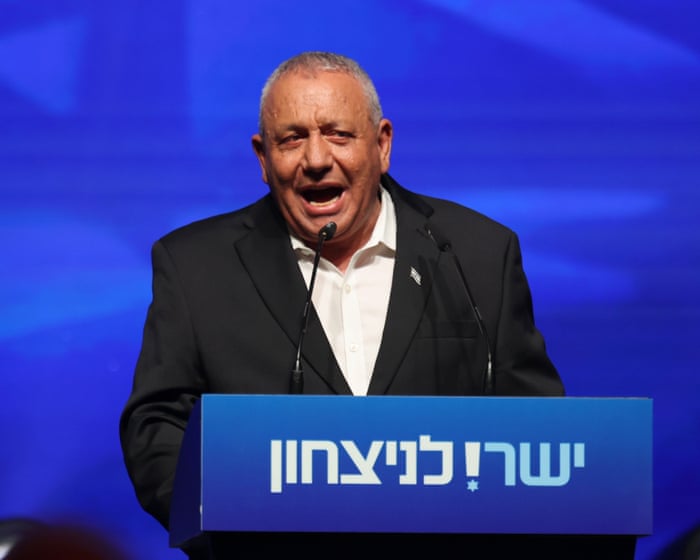
Gadi Eisenkot accused caretaker prime minister Benjamin Netanyahu and his circle on Friday of encouraging a racist campaign against Israel's Arab citizens for political purposes. In a social-media statement quoted by the Guardian and Al Jazeera, he argued that disagreement with Arab parties did not justify denigrating an entire community. The accusation is Eisenkot's assessment of the campaign.S1S2
The reports describe Netanyahu's criticism of Arab party leaders for not calling Hamas a terrorist organisation, while also noting that those leaders condemned the 7 October 2023 attack. That distinction matters: disagreement over a label is not the same as an absence of condemnation. The cited coverage also says electoral authorities rejected Netanyahu's allegations of fraud involving Arab-majority parties.S1S2
Why it matters
Raam and the Joint List won a combined 19 seats in the 120-member Knesset, according to the reports. Al Jazeera puts Eisenkot's four-party alliance on 48 seats and Netanyahu's right-wing and religious bloc on 53. None of those groupings alone holds an outright parliamentary majority.S1S2
Arab-led parties endorsed Eisenkot for the task of forming a government, but that does not establish an agreement to enter his cabinet. Al Jazeera reports that Eisenkot has ruled out forming a government with them. The Guardian separately reports that his ally Avigdor Lieberman has threatened to withdraw support if Arab Israelis are part of the coalition.S1S2
The background
An official Israeli government notice records that Herzog formally tasked Eisenkot with forming a government on Sunday 8 November. Receiving that mandate is an opportunity to assemble a government, not appointment as prime minister. The outgoing administration continues serving during the formation process, the US Law Library of Congress explains.R1R2
The Law Library also distinguishes political convention from the legal confidence vote. Governments have historically relied on coalition agreements providing at least 61 seats, but a government can in principle win a confidence vote with a relative majority if some members abstain. Seat totals therefore indicate negotiating strength without, by themselves, settling every possible route to office.R2
What happens next
The initial period for the first candidate to form a government is 28 days. The president may extend it by up to 14 days in total, according to the Knesset's explanation and the Law Library. References to six weeks describe the maximum with an extension, not an automatic initial entitlement.R2R3
If the first candidate fails, the president may assign another candidate 28 days or report that no government can be formed. Further parliamentary procedures can follow, so the mandate does not automatically pass to Netanyahu. The immediate unresolved question is which parties will agree to support a government and on what terms.R2S1S2