Kremlin rejects reports of possible Russian nuclear-capable satellite launch
A German media investigation cited intelligence assessments that Russia could launch a satellite designed to carry a nuclear weapon as early as December 2026.
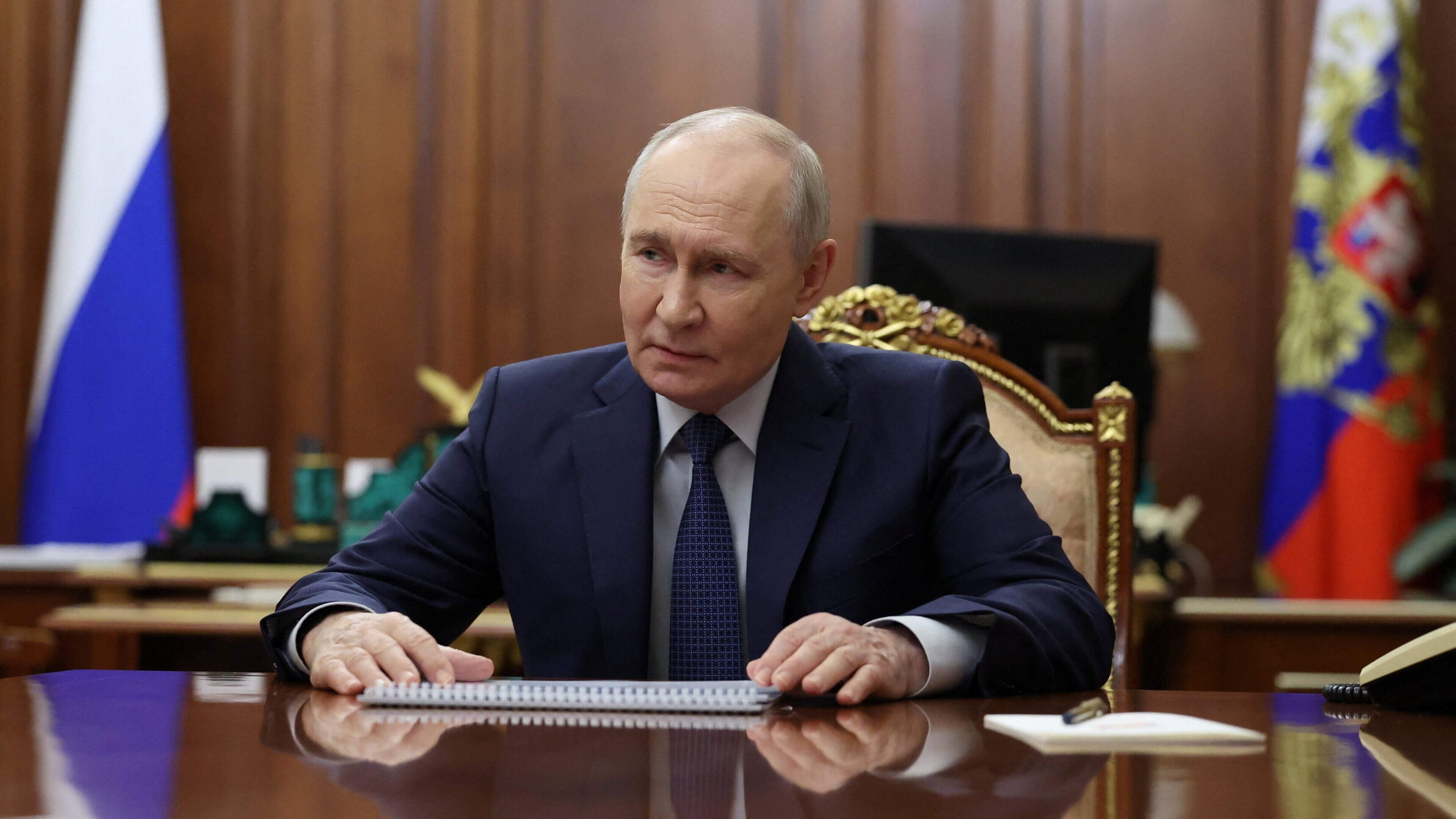
Some spin · most spun: The Independent 43/100 See every outlet’s spin ↓Photo as used by Irish Independent for “Russia plans to send satellite with nuclear weapon into space ‘by end of year’”How Irish Independent framed it: The Irish Independent uses a photograph of Vladimir Putin seated at a desk, making the Russian president the visual focus of the launch claim. The image personalises the story rather than showing a satellite or the alleged weapon.
Three German news outlets reported that Western intelligence services had warned of a possible Russian satellite launch. The Kremlin and Russia’s embassy in Berlin rejected the reports. The published accounts do not establish that a launch has been scheduled or that a nuclear warhead would be on board.
Of the seven supplied full articles, five report the Russian embassy’s denial: The Times of India, Fox News, The Kyiv Independent, The Moscow Times and The Independent. Three of those seven mention Russia’s 2024 UN veto: The Times of India, Ars Technica and The Kyiv Independent. Ars Technica and the New York Post discuss US weapons deployed in space, while The Independent devotes significant space to Trump’s relationship with Putin. The Irish Independent, The Japan Times and the Financial Times were supplied only as headlines or with short summaries, limiting comparison of their full coverage.
December 2026Earliest launch month cited in the German investigation, not a confirmed dateS4S5S7S9
60 daysPossible launch window in warnings reportedly shared in early NovemberS4S9
13Security Council members who backed the 2024 draft, according to The Kyiv IndependentS7
What happened
German broadcasters WDR and NDR and the newspaper Süddeutsche Zeitung published a joint investigation on 23 November about a Russian satellite identified as Sputnik-S. They reported that some Nato countries received intelligence warnings in early November that a launch could take place within 60 days. Germany’s military Space Command was reported to consider a December launch possible.R1S4S5S7S9
The investigation reported that the satellite had been assembled and had been kept in storage in the Moscow region for several years. Some coverage describes a possible launch with a nuclear warhead on board, while other accounts describe a satellite capable of carrying one. The published accounts do not verify what would be on board if it launched.S1S2S7S8S9
Kremlin spokesman Dmitry Peskov said the Kremlin had not seen the report and questioned its reliance on unnamed sources. Russia’s embassy in Berlin separately rejected the allegations and said Russia’s space activities were peaceful and complied with international law.R1S4S9
Why it matters
In a public assessment in October, the US Defense Intelligence Agency said Russia was developing a satellite designed to carry a nuclear weapon. The published excerpts of that assessment give no launch date. The December estimate comes from the later German investigation.S4S5S7S9
The US agency warned that such a weapon could damage or disable thousands of satellites operated by governments and companies. It identified communications, navigation and weather services among those that could be affected. Space researcher Bleddyn Bowen told Bloomberg that Russia could also lose access to military and civilian satellite services in such a scenario.S5S7S8S9
The background
Article IV of the 1967 Outer Space Treaty prohibits placing nuclear weapons or other weapons of mass destruction in orbit or otherwise stationing them in outer space. Russia is a party to the treaty. For that provision, the distinction is whether a weapon is placed in orbit, not whether a satellite is designed to carry one.R2S5S7S8
On 24 April 2024, Russia vetoed a UN Security Council draft resolution on weapons in outer space. The Kyiv Independent reported that Japan and the US proposed the draft, which called on states to uphold the treaty. It reported that 13 council members voted in favour and China abstained.R3S7
What happens next
German Chancellor Friedrich Merz addressed the reports on 23 November without discussing when a launch might occur. Nato Secretary General Mark Rutte said the alliance’s defence planning included threats in space. Neither response established that Russia had set a launch date, and the published accounts do not verify that a launch has taken place.R1S4S5S9
What most outlets left out
Material facts only a few of the outlets we read included.
The Kyiv Independent reported that Japan and the US proposed the 2024 Security Council draft, that 13 members backed it and that China abstained.R3S7
The vote shows the draft had majority support but did not pass because Russia vetoed it.
Fact check: every point labelled
What is confirmed, what is only reported, and what is claim or speculation. Every point links to its source.
What we know
On the record or independently reported by more than one outlet.
confirmedWDR, NDR and Süddeutsche Zeitung published a joint investigation on 23 November 2026 citing Western intelligence about a satellite identified as Sputnik-S.R1S4S7S9
confirmedSome accounts describe a possible launch with a nuclear warhead on board, while others describe a satellite capable of carrying one.S1S2S7S8S9
confirmedDmitry Peskov said the Kremlin had not seen the report and questioned its reliance on unnamed sources.S4S9
confirmedRussia’s embassy in Berlin rejected the allegations and said Russia’s space activities were peaceful and complied with international law.R1S4S9
confirmedThe US Defense Intelligence Agency published an assessment in October 2026 saying Russia was developing a satellite designed to carry a nuclear weapon.S4S5S7S9
confirmedThe published excerpts of the October US assessment give no launch date; the December estimate appears in the later German investigation.S4S5S7S9
confirmedArticle IV of the 1967 Outer Space Treaty prohibits putting nuclear weapons or other weapons of mass destruction in orbit or otherwise stationing them in outer space; designing a satellite to carry such a weapon is not the act prohibited by that provision.R2S5S7
confirmedRussia is a party to the Outer Space Treaty.S5S8
confirmedRussia vetoed a UN Security Council draft resolution on weapons in outer space on 24 April 2024.R3
confirmedGerman Chancellor Friedrich Merz addressed the reports on 23 November.S4S5
confirmedNato Secretary General Mark Rutte said the alliance’s defence planning included threats in space.S4
confirmedThe published accounts do not verify that a launch has been scheduled or has taken place, or establish what would be on board.R1S2S4S5S7S9
Reported but not yet confirmed
Reported as fact, but from a single origin.
reportedWDR, NDR and Süddeutsche Zeitung: Some Nato countries received intelligence warnings in early November about a possible launch.S4S9
reportedThe Kyiv Independent: Japan and the US proposed the draft, which called on states to uphold the Outer Space Treaty. Thirteen council members voted in favour and China abstained.S7
reportedArs Technica: Friedrich Merz addressed the reports without discussing when a launch might occur.S5
Claims and disputes
What people say. Not established fact.
disputedIntelligence sources cited by the German investigation; disputed by Russia’s embassy in Berlin: Sputnik-S had been assembled and had been kept in storage in the Moscow region for several years; Russia’s embassy in Berlin rejected the investigation’s allegations.R1S2S7S9
claimedRussia’s embassy in Berlin: Russia’s space activities are peaceful and comply with international law.S4S9
claimedUS Defense Intelligence Agency: Russia is developing a satellite designed to carry a nuclear weapon.S4S5S7S9
Speculation and opinion
Predictions and views, kept apart from the facts.
speculationWestern intelligence services and Germany’s military Space Command, as cited by the German investigation: The warnings suggested a launch was possible within 60 days, and Germany’s military Space Command reportedly considered a December launch possible.S4S5S9
speculationUS Defense Intelligence Agency: A weapon of this kind could damage or disable thousands of satellites operated by governments and companies and affect communications, navigation and weather services.S5S7S9
speculationBleddyn Bowen: Russia could also lose access to military and civilian satellite services in such a scenario.S8
Context the headlines leave out
A satellite designed to carry a nuclear weapon is not necessarily carrying one. Article IV of the Outer Space Treaty prohibits placing objects carrying nuclear weapons or other weapons of mass destruction in orbit.R2S2S7
The published excerpts of the October US assessment describe the alleged development and possible effects of a weapon. The later German investigation reports a possible launch window.S4S5S7S9
Still unknown
Whether Sputnik-S exists in the form described in the intelligence reports.
Whether Russia has authorised or scheduled a launch.
Whether a nuclear warhead would be on board if the satellite were launched.
What evidence underlies the reported launch estimate.
Key questions
Has Russia launched Sputnik-S?
The published accounts describe warnings about a possible launch. They do not verify that one has taken place.R1S4S7S9
Where did the December launch estimate come from?
The German investigation reported that Germany’s military Space Command considered a December launch possible. The published excerpts of the October US assessment do not give a launch date.S4S5S7S9
What has Russia said about the reports?
Kremlin spokesman Dmitry Peskov said the Kremlin had not seen the report and questioned its unnamed sourcing. Russia’s embassy in Berlin rejected the allegations and said its space activities complied with international law.R1S4S9
Does the Outer Space Treaty ban nuclear weapons in orbit?
Yes. Article IV prohibits placing nuclear weapons or other weapons of mass destruction in orbit or otherwise stationing them in outer space.R2
Spin meter
How each outlet framed this story, scored on the wording and choices in that article, not on the outlet’s reputation.
Headlines compared: Most headlines lead on a possible Russian launch, but the Irish Independent, the Financial Times and the New York Post use more definite wording than their supplied context establishes. The Moscow Times instead leads with the Kremlin’s dismissal, while The Japan Times and Fox News explicitly retain the possibility that a launch may occur.
The IndependentFraming: Leans left · Spin 43/100 · Headline matches story: yes
“Russia ‘planning to launch satellite with nuclear weapon into space by end of the year’”
Straight reportingHeavy spin
The Independent links the launch warning and potential damage to criticism of Trump’s relationship with Putin.
Why? 4 framing techniques
loaded languagea disturbing new report The description supplies an emotional assessment rather than leaving the reported warning to speak for itself.
emphasispresident Donald Trump met with his Russian counterpart Vladimir Putin in China last week and referred to him as a “friend” The article shifts substantial attention from the satellite warning to criticism of Trump’s relationship with Putin.
loaded languagePutin’s supposedly cosy relationship with Trump The phrase characterises the leaders’ relationship sceptically rather than simply reporting their statements.
omission The article mentions the treaty but does not explain its specific prohibition, Russia’s membership or its 2024 UN veto.
The Times of IndiaFraming: Not political · Spin 38/100 · Headline matches story: yes
“Nuclear weapon in space? Russia may launch warhead-capable satellite by December”
Straight reportingHeavy spin
The Times of India pairs the attributed launch warning with Medvedev’s arguments about nuclear weapons and state survival.
Why? 2 framing techniques
emphasisNuclear option for survival The article gives substantial prominence to Medvedev’s general arguments about nuclear use alongside a separate satellite report.
omission The article mentions the UN veto but does not explain the Outer Space Treaty’s prohibition or Russia’s status as a party.
New York PostFraming: Not political · Spin 30/100 · Headline matches story: partly
“Russia is preparing to launch a nuclear space weapon — as soon as next month, intelligence warns”
Straight reportingHeavy spin
The New York Post uses urgent language for the launch warning but also includes Russian denials, US activity and an expert’s assessment.
Why? 3 framing techniques
emphasisRussia is preparing to launch a nuclear space weapon The headline presents preparation as established, whereas the text describes intelligence fears about a possible launch of a capable satellite.
loaded languageRussia’s space nuke program The informal phrase gives the reported programme a more dramatic tone than the attributed intelligence assessment.
unnamed sourcespeople familiar with the matter told Bloomberg The account relies partly on unidentified sources, limiting readers’ ability to assess their knowledge directly.
Fox NewsFraming: Not political · Spin 25/100 · Headline matches story: yes
“Russia could launch nuclear-capable satellite within weeks, Western intelligence warns: report”
Straight reportingHeavy spin
Fox News stresses the security threat and potential satellite losses while reporting Russian denials and Nato’s response.
Why? 2 framing techniques
emphasiscrippling thousands of satellites used by the United States and its allies Fox foregrounds the threat to the United States and allies, although the potential damage could extend to satellites worldwide.
omission The supplied text does not explain the Outer Space Treaty’s prohibition or mention Russia’s 2024 UN veto.
Irish IndependentFraming: Not political · Spin 22/100 · Headline matches story: unknown
“Russia plans to send satellite with nuclear weapon into space ‘by end of year’”
Straight reportingHeavy spin
The Irish Independent’s headline presents the possible launch as a Russian plan; no article text was supplied.
Why? 1 framing technique
emphasisRussia plans to send satellite with nuclear weapon The headline states a plan more definitively than the intelligence warning about a possible launch.
Ars TechnicaFraming: Not political · Spin 20/100 · Headline matches story: yes
“Russia may launch a nuclear-armed satellite far sooner than we thought”
Straight reportingHeavy spin
Ars Technica emphasises the reported timetable and technical consequences, including risks to Russian and Chinese satellites.
Why? 2 framing techniques
emphasisfar sooner than we thought The headline stresses an unexpectedly urgent timetable, while the earlier US assessment cited in the article gave no launch date.
opinion as factIf it goes ahead, the launch would violate the 1967 Outer Space Treaty A violation would depend on placing a nuclear weapon or other prohibited payload in orbit, not merely launching a capable satellite.
Financial TimesFraming: Not political · Spin 20/100 · Headline matches story: yes
“Russia poised to put nuclear weapon in space within 60 days, Germany warns”
Straight reportingHeavy spin
The Financial Times foregrounds the reported 60-day window and Berlin’s response; only a headline and summary were supplied.
Why? 1 framing technique
emphasisRussia poised to put nuclear weapon in space within 60 days The headline sounds more definite than the summary’s account that Moscow could deploy the satellite.
The Kyiv IndependentFraming: Not political · Spin 18/100 · Headline matches story: yes
“Russia preparing to put nuclear weapons in space, German media investigation claims”
Straight reportingHeavy spin
The Kyiv Independent leads on the German investigation and adds the embassy’s denial and Russia’s UN veto.
Why? 1 framing technique
emphasisRussia is preparing to launch a satellite carrying a nuclear warhead The opening describes a nuclear payload as part of the reported plan, while attributing the claim to the German investigation.
The Japan TimesFraming: Not political · Spin 12/100 · Headline matches story: unknown
“Allies say Russia may launch nuclear space weapon next month”
Straight reportingHeavy spin
The Japan Times highlights a possible launch and its potential consequences for satellites; only a headline and summary were supplied.
Why? 1 framing technique
emphasisrapid destruction or degradation of thousands of satellites The summary foregrounds the potential scale of damage while the headline retains uncertainty about a launch.
The Moscow TimesFraming: Not political · Spin 12/100 · Headline matches story: yes
“Kremlin Dismisses Reports About Alleged Nuclear-Armed Satellite Launch”
Straight reportingHeavy spin
The Moscow Times leads on the Kremlin’s dismissal and provides the German report and US assessment as context.
Why? 1 framing technique
emphasisKremlin Dismisses Reports About Alleged Nuclear-Armed Satellite Launch The headline leads with the Kremlin’s response rather than the underlying intelligence warning, though the article includes both.
Timeline
1967 — The Outer Space Treaty set out a prohibition on placing nuclear weapons or other weapons of mass destruction in orbit or otherwise stationing them in outer space.R2S5S7
24 April 2024 — Russia vetoed a UN Security Council draft resolution on weapons in outer space.R3
October 2026 — The US Defense Intelligence Agency published an assessment saying Russia was developing a satellite designed to carry a nuclear weapon.S4S5S7S9
23 November 2026 — The German investigation reported a possible launch as early as December. The Kremlin rejected the reports.R1S4S7S9
Earlier coverage of similar events
How outlets reported related stories before this one. Compare for yourself.
Help power NoDirection. Read without adverts.Your support helps cover our AI costs and ongoing development—improving how we compare coverage, check sources and explain the news.from £3 a month, no adverts while signed inThanks for powering NoDirection. You’re reading without adverts.
How we compared this: we read 23 outlets over 24 hours, labelled every factual point by how well it is supported, and scored 10 articles for spin (0 = straight reporting, 100 = heavily slanted). How it works · Editorial policy
This story was written and checked by AI agents using only the sources above, then published automatically. Facts are labelled by how well they are supported. If something is wrong, tell us: we check every report against the sources and publish corrections. Editorial policy