What happened
UN Secretary-General António Guterres urged governments at COP31 to cut emissions immediately, saying reductions of about 6% a year over the next few years were needed. Speaking in Antalya, Turkey, on Friday, he said the aim was to limit how far and for how long warming exceeds 1.5°C, then bring temperatures below that level.R1S3
His remarks came amid debate over a proposal to increase electricity's share of global energy consumption from roughly 21% to 35% by 2035. The AP account carried by the Independent says the pledge favours renewable power but does not require it. That leaves disagreement about how much emphasis should be placed on the source of electricity.S3
Why it matters
Electrification and cleaner electricity are related but separate parts of the proposed transition. Climate TRACE estimates that achieving the target without prioritising emissions reductions could cut current global emissions by about 7%. Matching the most effective electrification measures with new clean power could raise that reduction to nearly 14%, its analysis says.R3
Those are estimates of potential outcomes under different approaches, not reductions already achieved. According to the AP report, International Energy Agency executive director Fatih Birol favours securing broad participation without a clean-power requirement. Greenpeace's Jasmin Duregger argues that electrification must reduce dependence on fossil fuels; Guterres also called for clean electrification.S3R1R3
The background
The temperature figures require similar care. Climate Action Tracker's November update assigns 2.6°C of warming by 2100 to a scenario in which submitted 2030 and 2035 national targets are achieved. The AP account describes 2.6°C as the outcome even if all promises are fulfilled, but the report distinguishes near-term targets from scenarios incorporating longer-term pledges.R2S3
NewClimate Institute, a partner in the assessment, separately summarises the current-policy projection as 2.7°C by 2100. It says global climate action has effectively stalled for a fifth consecutive year. These projections depend on what governments implement and should not be read as measurements of warming that has already occurred.R4
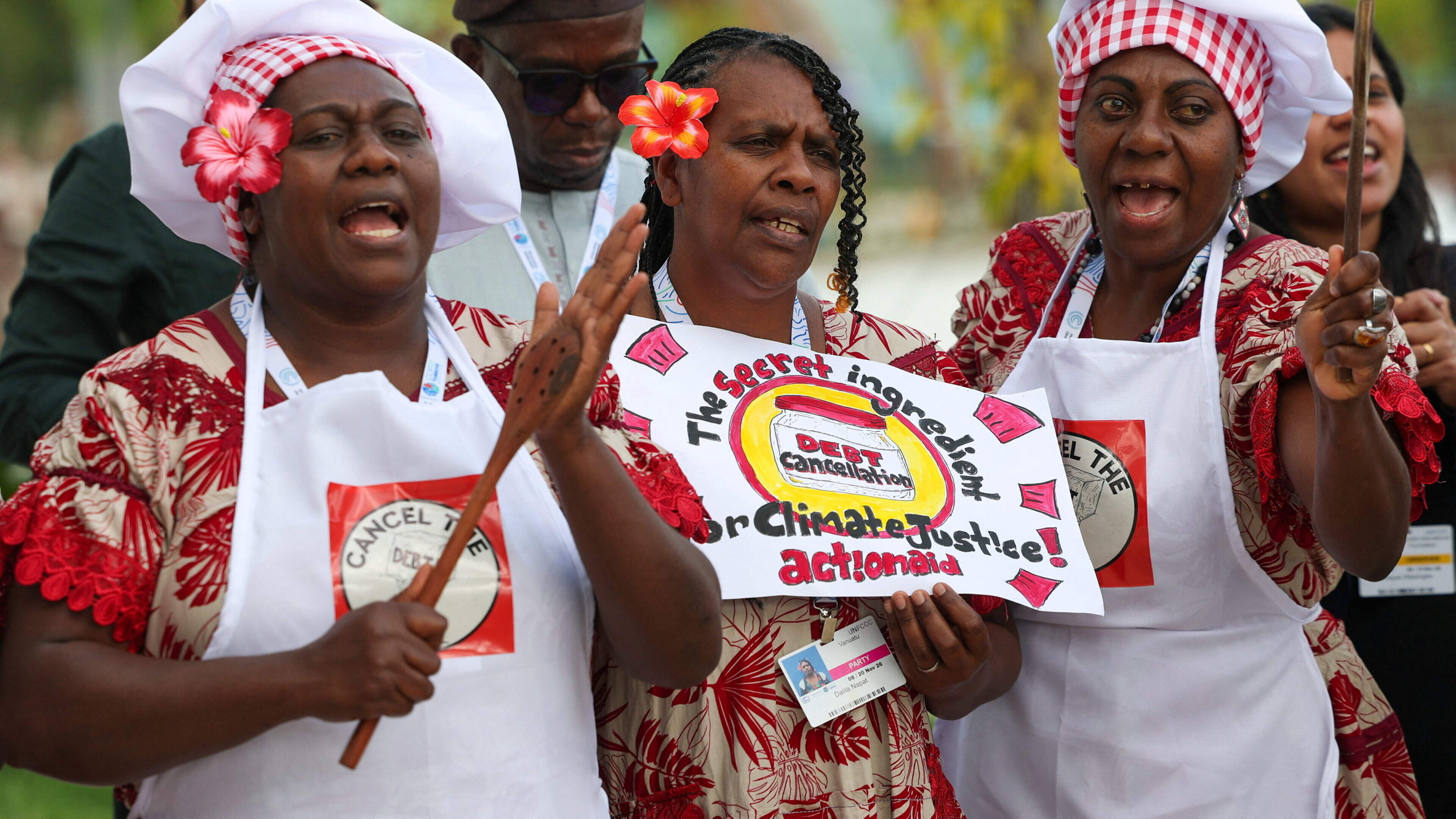
Finance is another part of Guterres's appeal. He called on developed countries to honour existing promises and provide more help for adaptation. He said even tripling adaptation finance would cover less than 30% of the need, framing emissions cuts and support for vulnerable countries as parallel responsibilities.S3
What happens next
At the conference's midpoint on Saturday, UN climate chief Simon Stiell said electrification and finance remained prominent in negotiations. He urged governments to address the hardest issues and avoid delaying tactics as talks entered their second week. His statement describes continuing negotiations, rather than a final agreement on the disputed electricity proposal.R5S3