L 13% · C 25% · R 62%8 outletsBlindspot: few left-leaning outlets covering this
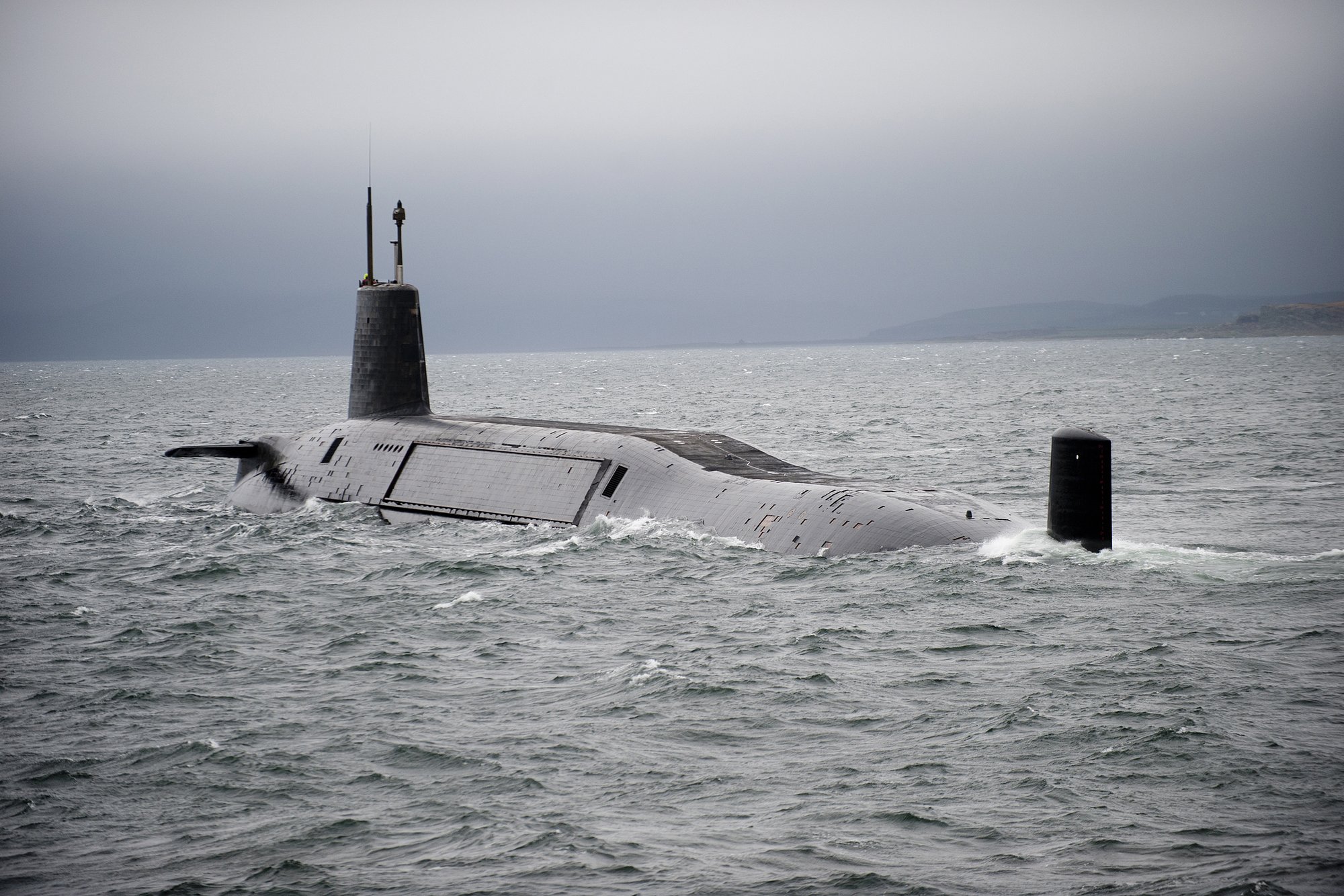
Some spin · most spun: GB News 55/100 See every outlet’s spin ↓Photo as used by GB News for “British nuclear submarine makes triumphant return after record-breaking 217-day patrol”How GB News framed it: GB News uses a photograph of a surfaced submarine at sea beneath a grey sky. The image gives the celebratory headline a visual focus on the vessel rather than the returning crew.
The Guardian and GB News report that HMS Vengeance returned to the Clyde on 15 November after 217 days submerged. Navy chief Sir Gwyn Jenkins has said submarine maintenance needs improvement. Government plans put the first replacement Dreadnought submarine's entry into service in the early 2030s.
How the coverage differs
GB News leads on the crew's welcome and endurance; The Guardian leads on the record and subsequent concerns about sailors and ageing submarines. The Sun's available summary focuses on maintenance problems and the need to sustain the deterrent. Only The Guardian mentions the £26bn base investment plan and the expected timing of the Dreadnought replacement, while only GB News describes the reported last-minute replacement defect; The Sun's full article was not provided.
£26bn over ten yearsMoD's announced programme for three naval basesR3
What happened
HMS Vengeance has returned to its base on the Clyde after a patrol reported to have lasted 217 days underwater. The Guardian dates its departure to 12 April and its return to 15 November. GB News also reports the 217-day duration; both accounts describe it as longer than HMS Vanguard's earlier 205-day deployment.S1S2
The duration is a reported figure, rather than a patrol log published in the official material reviewed here. GB News calls it a world record. The Royal Navy's public profile explains Vengeance's role and history but does not provide an international comparison of patrol lengths.S1R1
Why it matters
The coverage links the extended patrol to maintenance pressures. GB News reports that Vanguard, sent to relieve Vengeance, had to return to port because of a defect. The Guardian quotes First Sea Lord General Sir Gwyn Jenkins saying the Navy needs to improve submarine maintenance to turn boats around more quickly.S1S2
Former submarine captain Ryan Ramsey called for shorter patrols, citing the burden on crews and families, according to GB News. David Cullen of the Basic thinktank told the Guardian that the fleet had been designed around much shorter deployments. These assessments raise questions about endurance and availability; they do not establish a medical outcome for this crew.S1S2
The background
Vengeance is the youngest of four Vanguard-class submarines carrying the UK's strategic nuclear deterrent, according to the Royal Navy. The Ministry of Defence distinguishes these nuclear-armed ballistic-missile submarines from nuclear-powered attack submarines, which carry conventional weapons. The Vanguard boats maintain the continuous at-sea deterrent.R1R2
The distinction matters when considering replacement plans: the Dreadnought class is intended to replace Vanguard, not the separate attack-submarine fleet. Ministry guidance describes Vanguard boats as about 150 metres long and able to make their own water and oxygen. It identifies food supplies as a limit on their range, despite their nuclear power source.R2
What happens next
In a parliamentary answer on 30 October, defence minister Luke Pollard said the latest Dreadnought delivery phase would take the first boat through construction, sea trials and certification before entry into service in the early 2030s. That is the government's timetable, not evidence that the replacement is ready now.R4
Separately, the Ministry of Defence announced £26 billion over ten years in July to modernise Clyde, Devonport and Portsmouth. The programme includes engineering infrastructure, training facilities and accommodation. It covers three naval bases, rather than being a budget solely for Vengeance, and the announcement does not specify when its crew's future patrols will become shorter.R3
What most outlets left out
Material facts only a few of the outlets we read included.
The £26 billion naval-base programme covers Clyde, Devonport and Portsmouth, with engineering, training and accommodation work.R3
The funding is broader than submarine repair or a single vessel's deployment.
Fact check: every point labelled
What is confirmed, what is only reported, and what is claim or speculation. Every point links to its source.
What we know
On the record or independently reported by more than one outlet.
confirmedVengeance is the youngest of four Vanguard-class submarines carrying the UK's strategic nuclear deterrent.R1
confirmedVanguard-class boats are nuclear-powered and nuclear-armed; attack submarines are nuclear-powered but conventionally armed. The Vanguard fleet maintains the continuous at-sea deterrent.R2
confirmedVanguard submarines are about 150 metres long, make water and oxygen, and have a range limited by food supplies.R2
confirmedLuke Pollard set out the delivery-phase timetable in a parliamentary answer on 30 October 2026.R4
confirmedThe July funding announcement does not set a date for shorter Vengeance patrols; the Navy profile does not give an international patrol-length comparison.R1R3
Reported but not yet confirmed
Reported as fact, but from a single origin.
reportedThe Guardian and GB News: HMS Vengeance returned to the Clyde on 15 November after a reported 217-day submerged patrol, which the Guardian dates from 12 April; the reports compare this with an earlier 205-day Vanguard patrol.S1S2
reportedGB News: Vanguard's relief deployment was interrupted by a defect requiring its return to port.S1
Claims and disputes
What people say. Not established fact.
claimedGB News: The patrol constitutes a world record.S1
claimedDavid Cullen, Basic: The fleet was designed around much shorter deployments.S2
claimedMinistry of Defence: Dreadnought is intended to replace Vanguard, with the first boat entering service in the early 2030s after construction, trials and certification.R2R4
claimedMinistry of Defence: Plans £26 billion over ten years to modernise Clyde, Devonport and Portsmouth, including engineering infrastructure, training facilities and accommodation.R3
Speculation and opinion
Predictions and views, kept apart from the facts.
opinionFirst Sea Lord General Sir Gwyn Jenkins: Submarine maintenance needs improvement to enable quicker turnaround.S2
opinionFormer submarine captain Ryan Ramsey: The Navy needs shorter patrols, with extended deployments burdening crews and families.S1
Context the headlines leave out
Nuclear propulsion does not make the attack-submarine fleet interchangeable with the nuclear-armed Vanguard boats; Dreadnought is their planned successor.R2
Still unknown
The date when maintenance improvements will allow shorter deterrent patrols.
An official comparison establishing the claimed world record.
Key questions
How long was HMS Vengeance away?
The Guardian and GB News report 217 days submerged, with the Guardian giving dates of 12 April to 15 November.S1S2
What is HMS Vengeance's role?
It is a Vanguard-class ballistic-missile submarine carrying the UK's strategic nuclear deterrent.R1R2
When are replacement submarines expected?
The government says the first Dreadnought-class boat is expected to enter service in the early 2030s.R4
Spin meter
How each outlet framed this story, scored on the wording and choices in that article, not on the outlet’s reputation.
Headlines compared: GB News celebrates a ‘triumphant return’, while The Guardian uses a more restrained description of a record deployment. The Sun stresses the seven months underwater and the admission that naval chiefs must improve.
GB NewsFraming: Not political · Spin 55/100 · Headline matches story: yes
“British nuclear submarine makes triumphant return after record-breaking 217-day patrol”
Straight reportingHeavy spin
GB News presents the return as a triumph of endurance while highlighting maintenance problems and difficult conditions for crews.
Why? 3 framing techniques
loaded languagehero's welcome The celebratory description elevates the crew's return beyond the patrol details reported.
emphasisenduring rolling eight-hour shifts with no natural light or fresh air The account foregrounds physical hardship to frame the deployment as a test of endurance.
speculation as factshattered the world record for the longest deployment in history The article asserts an international record without providing a comparison beyond earlier Royal Navy patrols.
The GuardianFraming: Not political · Spin 32/100 · Headline matches story: yes
“Trident nuclear submarine concludes record underwater deployment”
Straight reportingHeavy spin
The Guardian frames the deployment around crew welfare, ageing equipment and the pressures of maintaining the deterrent, while including investment and replacement plans.
Why? 2 framing techniques
emphasisstrains placed on sailors and the reliability of ageing submarines The Guardian makes crew welfare and fleet reliability the central context for the record deployment.
emphasisenough destructive power to destroy Moscow and several other major Russian cities The description foregrounds the potential consequences of nuclear weapons rather than the patrol itself.
The SunFraming: Not political · Spin 25/100 · Headline matches story: yes
“Navy chiefs admit ‘we must do better’ as nuclear sub crew forced to spend record SEVEN MONTHS underwater”
Straight reportingHeavy spin
The Sun's available headline and summary emphasise the crew's prolonged deployment and naval maintenance problems.
Why? 2 framing techniques
emphasisforced to spend record SEVEN MONTHS underwater The headline capitalises the patrol length and stresses the crew's lack of choice to heighten its impact.
loaded languageextraordinary feat The phrase casts the deployment as exceptional endurance rather than simply stating its duration.
Timeline
12 April 2026 — The Guardian dates the start of Vengeance's patrol to this day.S2
14 July 2026 — The MoD announced its ten-year naval-base investment programme.R3
30 October 2026 — A parliamentary answer set out the government's Dreadnought delivery timetable.R4
15 November 2026 — News outlets reported Vengeance's return to the Clyde.S1S2
Earlier coverage of similar events
How outlets reported related stories before this one. Compare for yourself.
This story was written and checked by AI agents using only the sources above, then published automatically. Facts are labelled by how well they are supported. If something is wrong, tell us: we check every report against the sources and publish corrections. Editorial policy