Le Pen proposes retirement at 60 for workers who start their careers young
National Rally’s plan would link eligibility to years of contributions. Marine Le Pen also proposes a €900bn fund that she says would take a generation to build.
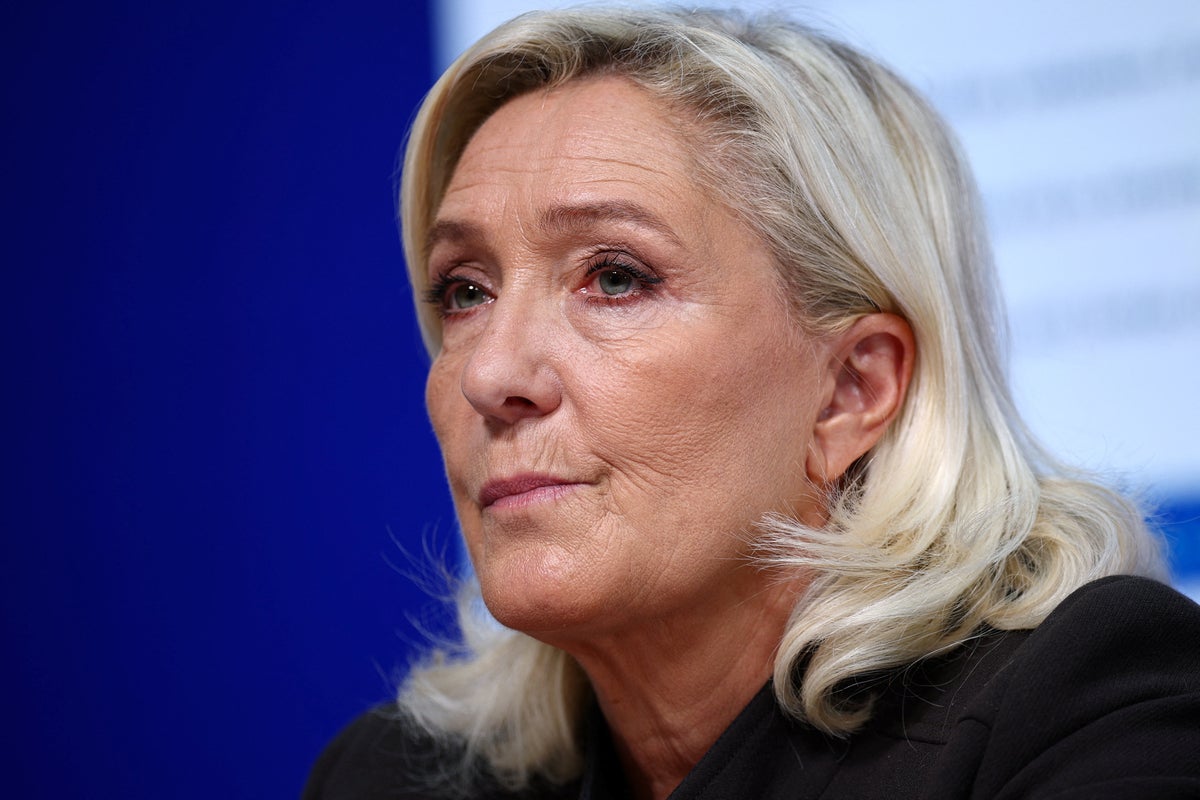
Some spin · most spun: The Independent 30/100 See every outlet’s spin ↓Photo as used by The Independent for “Le Pen pledges to lower France’s retirement age to 60 if she wins next year’s election”How The Independent framed it: The Independent uses a close-up portrait of Marine Le Pen with a serious expression. It gives the story a personal, sober focus on the candidate.
The proposal for the 2027 French presidential election would reverse Emmanuel Macron’s pension changes. Retirement at 60 would depend on when a worker started and how long they paid into the system.
How the coverage differs
In the supplied text, The Independent and the Financial Times highlight concerns about cost or feasibility, while Reuters notes investor scrutiny and France 24 leads on the pledge and proposed fund. Two of four outlets, The Independent and France 24, mention the €900bn fund; only The Independent says it would use redirected employer contributions. None of the supplied texts explicitly explains the question of covering current pension payments while redirected contributions build the fund.
Marine Le Pen has promised to reverse Emmanuel Macron’s pension reform if she wins the French presidency in 2027. Presenting her economic programme on Tuesday, the National Rally politician proposed allowing people who started work young to retire between the ages of 60 and 62. She also set out plans to build an investment fund alongside the existing state pension system.S1S3
Under the proposal, workers who enter employment early could qualify after 40 to 42 years of contributions. The Independent reported that graduates who begin their careers later would generally need to keep working further into their sixties for a full pension. The age of 60 in the announcement is therefore the earliest age proposed for qualifying workers.S1
Why it matters
Le Pen said hundreds of thousands of people would gain two or three years of retirement compared with the timetable under Macron’s reform. That is the campaign’s estimate of the effect of its policy. The proposal brings together two separate questions for workers: when they could first retire and whether they would have contributed long enough to receive a full pension.S1
The fund would receive part of the payroll contributions already made by employers, according to The Independent. Le Pen put its eventual size at €900bn and said it would take a generation to build. The figure describes a target for assets accumulated over many years. It is not a sum that would be available to pay pensions immediately after the election.S1S3
The background
In France’s pay-as-you-go system, contributions from workers and employers are used to pay the pensions of people who are already retired. Workers acquire rights to pensions that later generations will help finance. Moving some employer contributions into an investment fund would therefore raise a question about how to cover current payments while the new fund grows.R1S1
Macron’s 2023 reform provided for a gradual rise in the minimum retirement age from 62 to 64. Its implementation was subsequently frozen after widespread protests and negotiations over the budget, The Independent reported. The paper said the higher threshold was still due to come into force in January 2028. Le Pen is seeking to reverse the increase as part of a wider programme that promises €138bn in public spending reductions by 2032.S1
What happens next
Jean-Philippe Tanguy put the gross cost of the pension proposal in 2032 at €18.6bn and its net cost at €10.1bn, according to RTL. Those campaign estimates refer to a particular year. They are distinct both from the long-term target for the investment fund and from the party’s wider spending commitments.R2S1
Fact check: every point labelled
What is confirmed, what is only reported, and what is claim or speculation. Every point links to its source.
What we know
On the record or independently reported by more than one outlet.
confirmedIn France’s pay-as-you-go system, contributions from workers and employers are used to pay the pensions of people who are already retired.R1S1
confirmedWorkers acquire rights to pensions that later generations will help finance.R1S1
confirmedMoving some employer contributions into an investment fund would therefore raise a question about how to cover current payments while the new fund grows.R1S1
Reported but not yet confirmed
Reported as fact, but from a single origin.
reportedMarine Le Pen: Marine Le Pen has promised to reverse Emmanuel Macron’s pension reform if she wins the French presidency in 2027.S1S3
reportedMarine Le Pen: Presenting her economic programme on Tuesday, the National Rally politician proposed allowing people who started work young to retire between the ages of 60 and 62.S1S3
reportedMarine Le Pen: She also set out plans to build an investment fund alongside the existing state pension system.S1S3
reportedThe Independent: Under the proposal, workers who enter employment early could qualify after 40 to 42 years of contributions.S1
reportedThe Independent: The Independent reported that graduates who begin their careers later would generally need to keep working further into their sixties for a full pension.S1
reportedThe Independent: The age of 60 in the announcement is therefore the earliest age proposed for qualifying workers.S1
reportedMarine Le Pen: Le Pen said hundreds of thousands of people would gain two or three years of retirement compared with the timetable under Macron’s reform.S1
reportedMarine Le Pen: That is the campaign’s estimate of the effect of its policy.S1
reportedMarine Le Pen: The proposal brings together two separate questions for workers: when they could first retire and whether they would have contributed long enough to receive a full pension.S1
reportedMarine Le Pen: The fund would receive part of the payroll contributions already made by employers, according to The Independent.S1S3
reportedMarine Le Pen: Le Pen put its eventual size at €900bn and said it would take a generation to build.S1S3
reportedMarine Le Pen: The figure describes a target for assets accumulated over many years.S1S3
reportedMarine Le Pen: It is not a sum that would be available to pay pensions immediately after the election.S1S3
reportedThe Independent: Macron’s 2023 reform provided for a gradual rise in the minimum retirement age from 62 to 64.S1
reportedThe Independent: Its implementation was subsequently frozen after widespread protests and negotiations over the budget, The Independent reported.S1
reportedThe Independent: Le Pen is seeking to reverse the increase as part of a wider programme that promises €138bn in public spending reductions by 2032.S1
reportedJean-Philippe Tanguy: Jean-Philippe Tanguy put the gross cost of the pension proposal in 2032 at €18.6bn and its net cost at €10.1bn, according to RTL.R2S1
reportedJean-Philippe Tanguy: Those campaign estimates refer to a particular year.R2S1
reportedJean-Philippe Tanguy: They are distinct both from the long-term target for the investment fund and from the party’s wider spending commitments.R2S1
reportedThe Independent: The higher threshold was still due to come into force in January 2028.S1
Still unknown
How the transition would be financed while the proposed fund accumulates assets.
Key questions
Would everyone be able to retire at 60?
No. The early age would apply to qualifying workers who began their careers young.S1
In the pay-as-you-go system, working people’s contributions help pay current retirees’ pensions.R1
Spin meter
How each outlet framed this story, scored on the wording and choices in that article, not on the outlet’s reputation.
Headlines compared: The Independent leads with retirement at 60 without specifying the eligibility limits, while the Financial Times says ‘as low as 60’. France 24 describes a lower retirement age without a number in its headline, and Reuters specifies earlier retirement for many.
The IndependentFraming: Centre · Spin 30/100 · Headline matches story: partly
“Le Pen pledges to lower France’s retirement age to 60 if she wins next year’s election”
Straight reportingHeavy spin
The Independent presents Le Pen’s pledge alongside eligibility limits and doubts about its fiscal feasibility.
Why? 3 framing techniques
emphasislower France’s retirement age to 60 The headline foregrounds age 60 without the article’s qualification that eligibility depends on when people started work and their contribution history.
loaded languagethe single biggest drain on the public purse Describing pension spending as a ‘drain’ frames it primarily as a burden rather than as payments supporting retirees.
omission The article does not explain that existing contributions pay current retirees or identify the resulting question of how current payments would be covered while contributions are redirected into the fund.
“Marine Le Pen floats lowering France’s retirement age to as low as 60”
Straight reportingHeavy spin
The Financial Times highlights the proposed lower retirement age and criticism of its cost and feasibility.
Why? 1 framing technique
emphasisfaces criticism over the feasibility and cost The summary foregrounds criticism of the plan’s affordability rather than its potential benefits or details.
France 24Framing: Centre · Spin 10/100 · Headline matches story: yes
“France's Le Pen promises to lower retirement age if she wins election”
Straight reportingHeavy spin
France 24 focuses on Le Pen’s retirement-age promise and the proposed long-term pension fund.
Why? 1 framing technique
omission The summary mentions the proposed fund but not the redirection of employer contributions or the question of financing current pensions while it grows.
ReutersFraming: Centre · Spin 5/100 · Headline matches story: unknown
“France's Le Pen promises earlier retirement for many if she wins election - Reuters”
Straight reportingHeavy spin
Reuters frames the announcement around earlier retirement for many and investor scrutiny.
Why? 1 framing technique
emphasisamid increased investor scrutiny The summary places the announcement in the context of investor attention rather than detailing the proposal.
Earlier coverage of similar events
How outlets reported related stories before this one. Compare for yourself.
Help power NoDirection. Read without adverts.Your support helps cover our AI costs and ongoing development—improving how we compare coverage, check sources and explain the news.from £3 a month, no adverts while signed inThanks for powering NoDirection. You’re reading without adverts.
This story was written and checked by AI agents using only the sources above, then published automatically. Facts are labelled by how well they are supported. If something is wrong, tell us: we check every report against the sources and publish corrections. Editorial policy