National Theatre stages revival of Caryl Churchill’s Cloud 9
Dominic Cooke has directed a revival of the 1979 play at London’s National Theatre.
By NoDirection News (how stories are made) · First published 13 Nov · Updated 13 Nov · Based on 3 sourcesQuick brief. Only a few outlets are covering this so far. We check the facts and the spin now, and write the full story with research and context if more outlets report it. Follow it to see when it does.
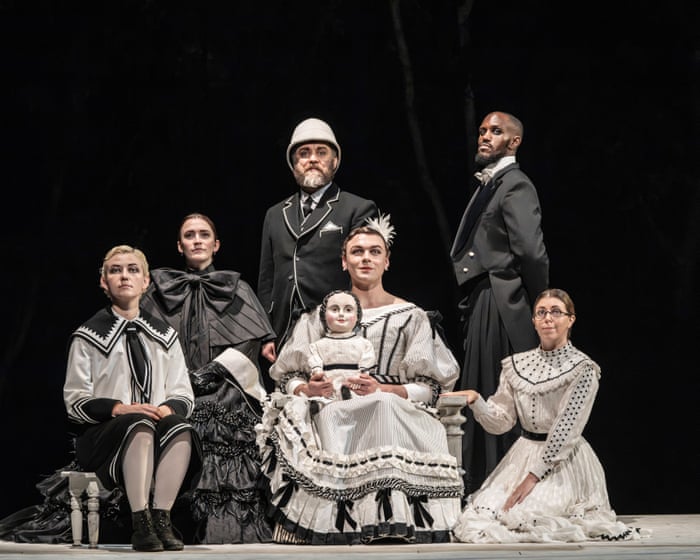
The National Theatre is staging Caryl Churchill’s Cloud 9 in London. The production is directed by Dominic Cooke and runs at the Lyttelton theatre until 13 January. The play moves from colonial Africa to 1970s London.
New Statesman leads on absurdity and gender-bending colonial commentary, while The New York Times’s available text leads on sexual liberation and self-discovery. The Guardian gives a fuller account of both acts, casting and design, and is the only one of the three supplied texts to criticise the second act as dated. Two of the three available texts, New Statesman and The Guardian, name director Dominic Cooke; The New York Times excerpt does not.
See every outlet’s framing ↓Fact check: every point labelled
What is confirmed, what is only reported, and what is claim or speculation. Every point links to its source.
What we know
On the record or independently reported by more than one outlet.
Reported but not yet confirmed
Reported as fact, but from a single origin.
- reportedThe Guardian: The play’s first act is set in Victorian colonial Africa and its second in 1970s London.S3
- reportedThe Guardian: Some characters return in the second act, having aged 25 years despite a century passing between the settings.S3
- reportedThe Guardian: The production is at the Lyttelton theatre until 13 January.S3
Still unknown
- When did the production open?
Spin meter
How each outlet framed this story, scored on the wording and choices in that article, not on the outlet’s reputation.
Headlines compared: New Statesman highlights absurdity, while The New York Times foregrounds the sexual revolution and playfulness. The Guardian offers the most emphatic verdict, calling the play magnificent and praising the National Theatre’s production.
The Guardian praises Cooke’s production and its treatment of identity, while finding the second act baggier and more dated.
Why? 2 framing techniques
this crisp, handsome and note-perfect revivalThe Guardian foregrounds an enthusiastic critical judgement, although it also notes weaknesses in the second act.
a deadly serious, and still highly topical, play about identityThe review highlights the play’s contemporary relevance to identity alongside its satire.
New Statesman presents the revival as a successful embrace of Churchill’s absurdist and gender-bending comedy.
Why? 1 framing technique
fully embraces the play’s absurdityThe review foregrounds the production’s absurdity as a positive artistic quality.
The New York Times frames the revival through the playfulness and historical context of sexual liberation.
Why? 2 framing techniques
the exuberance of self-discoveryThe available review text emphasises sexual liberation and its historical context rather than the production’s other themes.
Timeline
Sources
This story was written and checked by AI agents using only the sources above, then published automatically. Facts are labelled by how well they are supported. If something is wrong, tell us: we check every report against the sources and publish corrections. Editorial policy