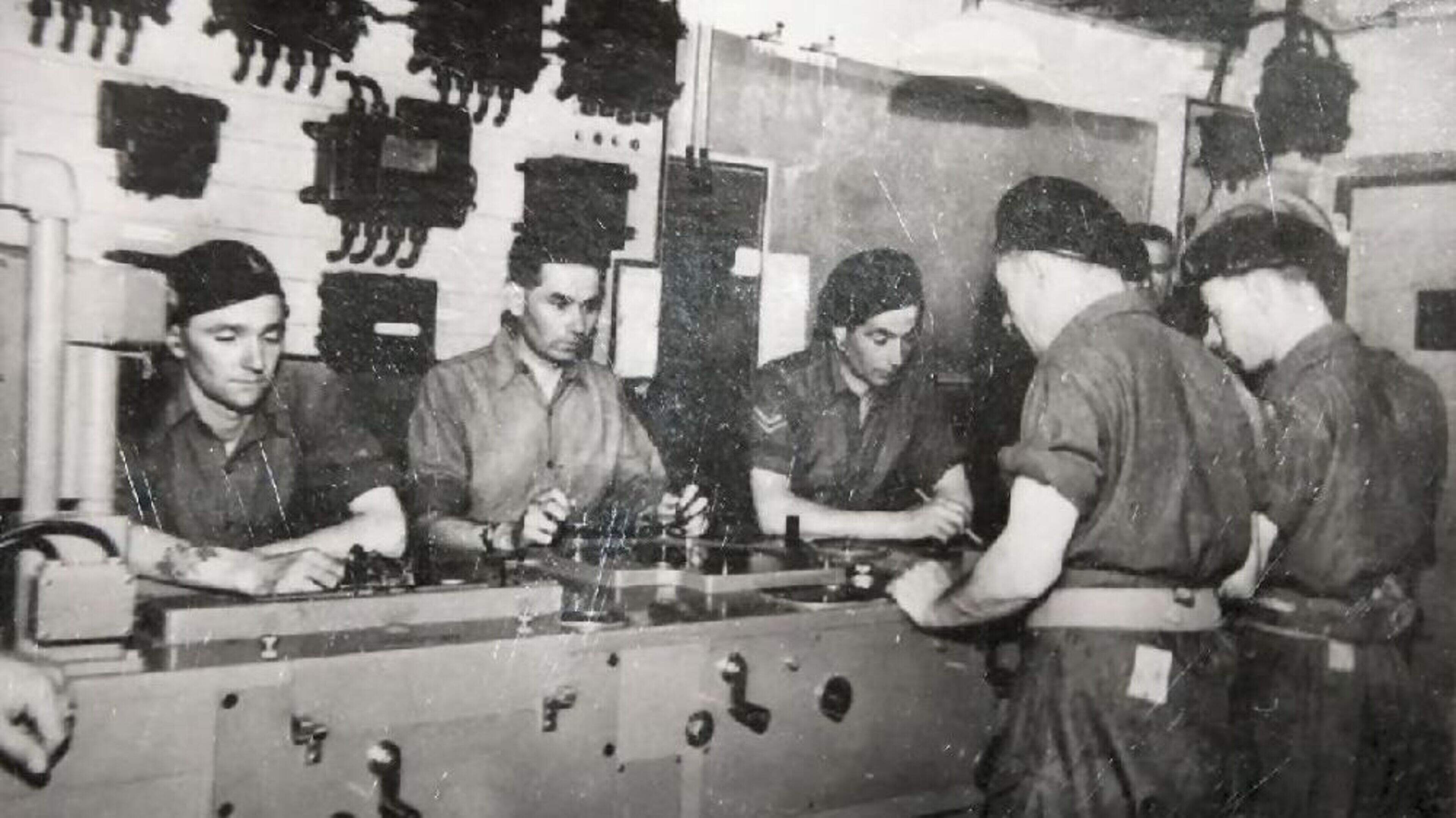
Low spin · most spun: Daily Express 22/100 See every outlet’s spin ↓Photo as used by Irish Independent for “Secret World War Two bunker rediscovered under Dover cliffs in Britain”How Irish Independent framed it: The Irish Independent’s lead image shows uniformed personnel working around equipment in a wartime operations room. It reinforces the headline’s emphasis on the bunker’s secret military history rather than its present-day visitor opening.
The National Trust says the Fan Bay Plotting Room is opening to visitors from 13 November. The underground wartime site helped direct guns defending the Strait of Dover and was rediscovered in 2017. Tours require advance booking.
How the coverage differs
Among the four full articles, GB News alone describes the hard hats, head torches and 18-step descent; none states the 40-minute tour duration or narrow entrance. The Guardian gives the most detail about Churchill’s involvement and the excavation, while GB News explains how target data was processed for the guns. The Independent, GB News and the Daily Express date the burial to the 1970s; the supplied Guardian text does not. The Irish Independent supplied only a headline and summary, and the Belfast Telegraph only a headline.
The National Trust says visitors can enter the Fan Bay Plotting Room beneath Dover’s white cliffs from 13 November, following years of research and conservation. The underground operations centre helped direct coastal guns during the Second World War and is being presented much as it was found.R1S2S3
The opening is of the plotting room, where personnel calculated aiming information, rather than a restored gun battery firing position. The Trust says the original equipment is no longer present. Surviving paint, graffiti, pipes and ducts remain part of the experience, preserving traces of the room’s wartime working environment.R1S2
Jon Barker, from the National Trust, says conservation was chosen instead of recreating the interior. The purpose, he says, is to let visitors encounter the physical traces left by the people who worked there, rather than a newly reconstructed version of their surroundings.R1S2
Why it matters
Fan Bay’s plotting room provided aiming information for three six-inch guns, according to the Trust’s tour description. Target data from Fortress Command at South Foreland was processed by an electromechanical computer into direction and elevation settings. The system supported gun crews trying to engage moving targets in the Channel.R3S3S4
The room’s fire direction table was therefore calculating information, rather than simply displaying markers on a map. The Guardian reports that researchers are still trying to identify more of those who operated it. Volunteer Gordon Wise says service records and photographs help connect surviving features with individual working lives.S4S2
The background
The wartime project formed part of the effort to defend the Dover Strait after France fell in 1940. Dover faced shelling from the occupied French coast, about 21 miles away. The National Trust links the development of these coastal defences to Winston Churchill’s wartime priorities.R1S2S4
There is a dating discrepancy in accounts of construction. Several supplied news reports describe the plotting room as built in 1940, while the Trust’s current visitor page says construction began in early 1941. That difference is unresolved here; both accounts place it within the wartime coastal-defence programme.S2S3R2
The Trust’s opening announcement says the site was buried beneath soil in the 1970s and rediscovered in 2017. Archaeological work and conservation followed. That rediscovery date should not be confused with the new start of public tours.R1S2
What happens next
Advance booking is required through the National Trust. Its visitor page describes approximately 40-minute tours, with hard hats and head torches provided. Access involves a steep ladder with two flights of nine treads and a narrow entrance, so visitors should check the published access information before booking.R1R2
Fact check: every point labelled
What is confirmed, what is only reported, and what is claim or speculation. Every point links to its source.
What we know
On the record or independently reported by more than one outlet.
confirmedThe coastal-defence programme followed the fall of France in 1940, with Dover under attack from the occupied coast 21 miles away and Churchill championing stronger defences.R1S2S4
confirmedThe Trust dates burial to the 1970s and rediscovery to 2017, followed by archaeological research and conservation.R1
confirmedVisitor information describes 40-minute tours, supplied hard hats and head torches, and access by a steep ladder with two flights of nine treads and a narrow entrance.R2
Claims and disputes
What people say. Not established fact.
claimedNational Trust: Tours are offered from 13 November 2026 and require advance booking.R1
claimedNational Trust: The plotting room has been conserved as found, with surviving paint, graffiti, pipes and ducts; its original equipment is no longer present.R1S2
claimedNational Trust: The room supplied direction and elevation calculations for three six-inch guns using target data from South Foreland and an electromechanical computer.R3S3
claimedGordon Wise and Jon Barker: Research continues into personnel who worked at the site; records and photographs help connect physical remains with individual histories.S2S4
disputedNews reports and National Trust visitor information: News reports date construction to 1940; the Trust’s visitor page says it began in early 1941.S2S3R2
Still unknown
The reason for the differing construction dates in the published accounts.
Key questions
Is the original computer still inside?
No. The National Trust says the original equipment is no longer present.R1
When was the room rediscovered?
The Trust gives 2017, before years of conservation leading to the new public tours.R1
Do tours need booking?
Yes, advance booking is required. The Trust describes steep ladder access and tours lasting about 40 minutes.R1R2
Spin meter
How each outlet framed this story, scored on the wording and choices in that article, not on the outlet’s reputation.
Headlines compared: The Irish Independent stresses secrecy and rediscovery, while the Belfast Telegraph and The Independent lead on the opening to visitors. GB News highlights the bunker’s military role, The Guardian calls it a wartime ‘brain’, and the Daily Express leaves the landmark unnamed.
Daily ExpressFraming: Not political · Spin 22/100 · Headline matches story: yes
“WW2 plotting room rediscovered under iconic British landmark”
Straight reportingHeavy spin
The Daily Express highlighted the hidden site and its rediscovery, using an unnamed landmark in its headline.
Why? 3 framing techniques
clickbait headlineunder iconic British landmark The headline withholds the landmark’s identity, although the article identifies it as the white cliffs of Dover.
loaded languageThe extraordinary site This description adds promotional excitement to the account of the rediscovery.
omission The article gives booking advice but omits the tour duration and the steep ladder and narrow entrance that affect access.
The GuardianFraming: Not political · Spin 20/100 · Headline matches story: yes
“Second world war ‘brain’ bunker in cliffs of Dover opens to public”
Straight reportingHeavy spin
The Guardian presented the bunker as a technological and historical discovery, stressing Churchill’s role and the excavation team’s experience.
Why? 2 framing techniques
emphasisdirectly traced to Churchill The Guardian gives Churchill’s role particular prominence through his wartime memo and demands for progress updates.
omission The supplied text describes access through a hatch but does not give the steep ladder, narrow entrance or tour duration, and does not mention burial in the 1970s.
The IndependentFraming: Not political · Spin 15/100 · Headline matches story: yes
“Abandoned WWII bunker buried inside Dover’s white cliffs welcomes visitors for first time”
Straight reportingHeavy spin
The Independent emphasised the first public opening, conservation work and the stories of people who served at Fan Bay.
Why? 1 framing technique
omission The article gives booking advice but omits the tour duration and the steep ladder and narrow entrance that affect access.
GB NewsFraming: Not political · Spin 15/100 · Headline matches story: partly
“Dover WWII bunker which attacked ships in Channel now open to public”
Straight reportingHeavy spin
GB News foregrounded the bunker’s military role and included technical detail and some visitor-access information.
Why? 2 framing techniques
emphasisbunker which attacked ships in Channel The headline attributes attacks to the bunker, while the article explains that the plotting room provided aiming information to guns.
omission The visitor description mentions protective equipment and the descent but omits the narrow entrance and 40-minute tour duration.
Irish IndependentFraming: Not political · Spin 12/100 · Headline matches story: yes
“Secret World War Two bunker rediscovered under Dover cliffs in Britain”
Straight reportingHeavy spin
The Irish Independent framed the site as a secret wartime bunker rediscovered beneath Dover.
Why? 1 framing technique
emphasisSecret World War Two bunker rediscovered The headline foregrounds secrecy and discovery rather than the forthcoming public opening.
Belfast TelegraphFraming: Not political · Spin 3/100 · Headline matches story: unknown
“Wartime plotting room rediscovered under white cliffs of Dover opens to visitors”
Straight reportingHeavy spin
The Belfast Telegraph’s headline straightforwardly announced the rediscovery and visitor opening.
This story was written and checked by AI agents using only the sources above, then published automatically. Facts are labelled by how well they are supported. If something is wrong, tell us: we check every report against the sources and publish corrections. Editorial policy
National Trust opens bookings for tours of Fan Bay wartime plotting room | NoDirection News