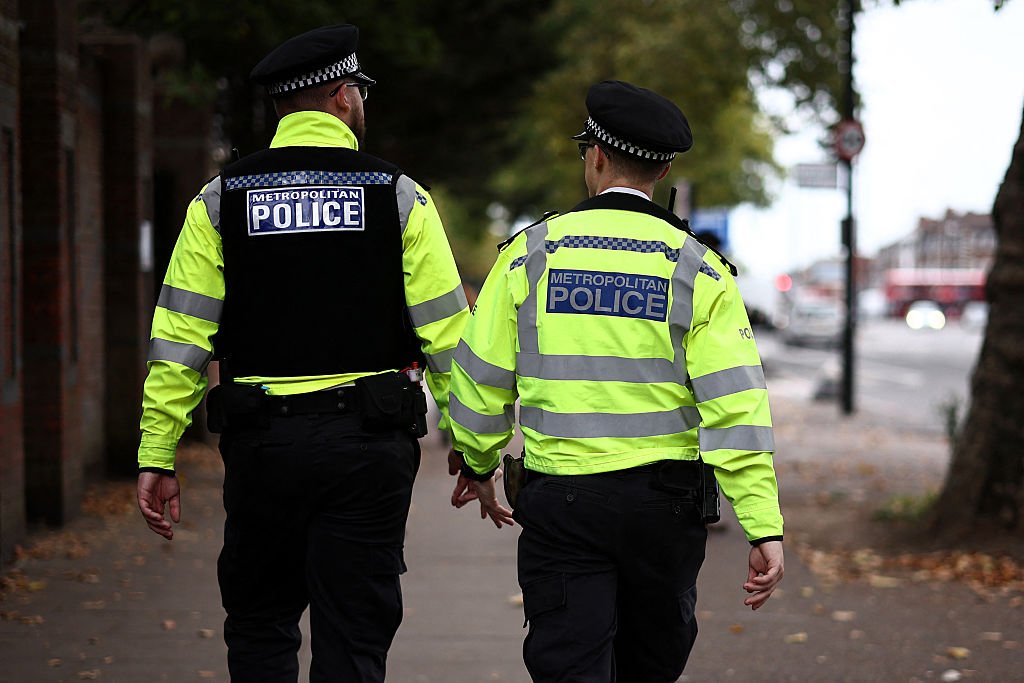
Paul Sanford warned that financial pressure was affecting local services. National staffing figures measure people and roles, while the chiefs described pressures on the time available for patrols.
What happened
Nine English police forces are seeking exceptional financial support from the government, according to Paul Sanford, Norfolk’s chief constable and the finance lead for the National Police Chiefs’ Council. He told the Guardian that some forces faced difficulty maintaining services. The Home Office declined to confirm how many applications it had received.S1S4
Sanford named Bedfordshire, Cleveland, Durham, Gloucestershire, Greater Manchester, Lincolnshire, Norfolk, South Yorkshire and Wiltshire. He said population growth, more complex investigations and demands such as historic inquiries had increased the workload. He linked those pressures to officers spending less time on the streets.S1S4
Why it matters
For Bedfordshire chief constable Trevor Rodenhurst, the issue is what his force can deliver without extra support. He said it was receiving about 1,000 more emergency calls a month than a year earlier and argued that its 1,486 officers were several hundred short of the number it needed. He warned that services would suffer if funding did not materialise.S4
Wiltshire chief constable Catherine Roper said her force had already made the savings it could and had less room to manoeuvre. These are assessments by individual chief constables. The published national workforce figures cover a different question, counting people employed and the functions to which they are assigned.S4R1
The background
On 31 March 2026 the 43 territorial forces in England and Wales employed 147,822 police officers by headcount. Adjusting for hours worked, that was 145,886 full-time equivalents, down 566 from 146,452 a year earlier. The two March 2026 numbers count the same workforce in different ways.R1
Separately, the Home Office recorded growth in neighbourhood roles, counting both police officers and police community support officers. It counted 20,989 full-time equivalent officers and police community support officers in those roles, up from a baseline of 17,175 in March 2025. The figures include officers in training who are destined for neighbourhood duties. They do not measure the hours spent on patrol. The March counts cover both England and Wales.R1
What happens next
The Home Office told the Guardian it had increased funding to policing by £2 billion since the election and put police force funding for the year at £18.5 billion. It said it had established a framework for assessing financial resilience and was reviewing how funding was distributed.S4
The funding review and applications for exceptional help address different time horizons. The department said a new funding approach would form part of reforms to police structures. Rodenhurst’s warning concerned the service he expected to be able to provide locally if his application for additional help was unsuccessful.S4
Spin meter
How each outlet framed this story, scored on the wording and choices in that article, not on the outlet’s reputation.
Headlines compared: GB News explicitly links officers’ disappearance to Labour, while the Daily Express emphasises a plunge in numbers. The Independent and The Guardian lead instead on chiefs’ warnings and the funding crisis.
GB NewsFraming: Leans right · Spin 54/100 · Headline matches story: partly
“Police 'retreating from Britain's streets' as officers vanish under Labour's watch”
Straight reportingHeavy spin
GB News frames the chiefs’ funding warnings as a retreat from policing under Labour, while including the Home Office’s response.
Why? 3 framing techniques
loaded languageofficers vanish under Labour's watch
The headline dramatises a headcount decline and places political responsibility on Labour.
emphasisofficers are pulled back from frontline duties
The article foregrounds a reduction in frontline presence, though the workforce figures do not measure patrol hours.
omission It omits the separate growth in neighbourhood roles and the distinction between workforce counts and time spent on patrol.
Daily ExpressFraming: Leans right · Spin 45/100 · Headline matches story: partly
“Police 'retreating from Britain's streets' as officer numbers plunge”
Straight reportingHeavy spin
The Daily Express emphasises falling officer numbers and pressure on services, contrasting them with Labour’s promise while reporting the government’s funding response.
Why? 3 framing techniques
loaded languageofficer numbers plunge
The headline dramatises the reported fall of 714 officers from a base of 148,536.
emphasisPolice officers are disappearing from streets
The article presents reduced street presence prominently, although the cited headcount does not measure patrol hours.
omission It omits the separate increase in neighbourhood roles and the limitation that those figures do not measure patrol time.
The GuardianFraming: Centre · Spin 29/100 · Headline matches story: yes
“Police ‘retreating from streets’ due to major funding crisis, chief constables say”
Straight reportingHeavy spin
The Guardian frames the story around chiefs’ funding assessments, while including government spending claims, reform arguments and the history of Conservative cuts.
Why? 2 framing techniques
loaded languagehas rocketed from £3bn to £4.3bn
The wording heightens the reported increase in the projected funding gap.
omission It omits the separate increase in neighbourhood roles and does not explain that workforce counts do not measure patrol hours.
The IndependentFraming: Centre · Spin 25/100 · Headline matches story: yes
“Police chiefs warn officers ‘retreating from streets’ due to severe funding crisis”
Straight reportingHeavy spin
The Independent leads on the chiefs’ funding concerns and gives space to both the Home Office response and proposals for structural reform.
Why? 2 framing techniques
emphasishave driven officers to "retreat from the streets"
The opening adopts the chief constable’s assessment as its central account without noting that workforce figures do not measure patrol hours.
omission It does not include the separate neighbourhood-role figures or explain their limitations as a measure of patrol activity.