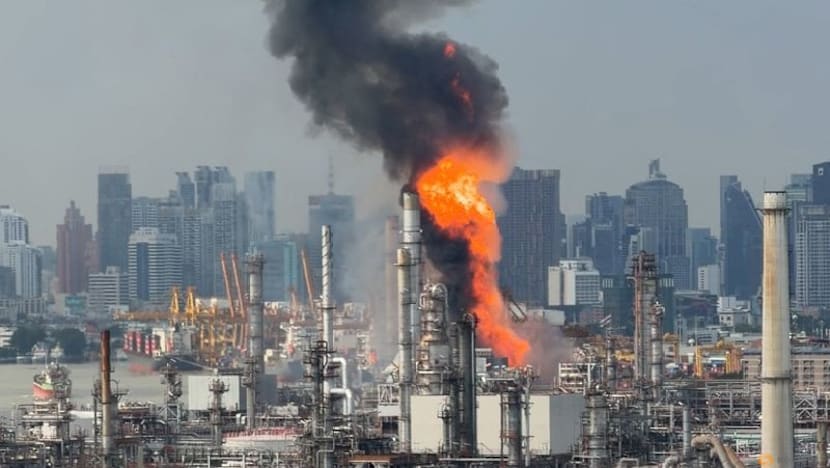
An explosion and fire at Bangchak’s Bangkok refinery injured at least nine people and prompted a brief evacuation. The company said it shut all production units. The cause remains under investigation.
What happened
An explosion and fire at Bangchak’s Phra Khanong refinery in Bangkok on 26 November injured at least nine people and prompted a temporary evacuation of nearby residents. Erawan Medical Centre said most injuries were burns and three people were in critical condition. Bangchak said it halted all production units at the site.S3S10
The company placed the start of the fire at about 2.45pm local time and said it was extinguished roughly 30 minutes later. Residents received a mobile-phone alert referring to an incident around 3pm. The city authority subsequently reported that the fire had been controlled, and officials allowed nearby residents to return home.S3S10
The published injury counts differ. The Express, citing Erawan Medical Centre, reported at least seven injured, four critically; the Independent reported at least nine injured according to local authorities, and attributed three critical cases to Erawan. Bangchak separately said nine personnel were injured and two had returned home.S8S10S3
Why it matters
Officials initially advised residents within five kilometres to remain cautious about air pollution even after the evacuation ended. The Pollution Control Department said it sent staff to assess air and water quality. Bangchak later said the department’s measurements at 5.30pm, within three to four kilometres of the refinery, showed air quality within normal ranges.S10S3
That company account describes measurements at a stated time and distance. It does not provide a complete account of water sampling or conditions at every location covered by the earlier warning. The reviewed reports do not contain a final environmental assessment or a detailed explanation of the cause.S3S10
The background
Bangchak lists the Phra Khanong refinery’s maximum processing capacity as 120,000 barrels a day. Its preliminary investigation placed the incident in the hydrocracking unit. Energy Minister Akanat Promphan said the fire appeared to have started in a refinery unit about 100 metres from the oil storage area, rather than identifying a completed cause investigation.R1S3S10
Akanat said Thailand’s oil supply should not be affected, pointing to five other refineries in the country. That was the minister’s expectation about supply, not a reported measurement of the shutdown’s eventual impact. Bangchak’s maximum daily capacity is also a measure of the facility’s size, rather than a confirmed quantity of production lost.S10R1
What happens next
The minister said operations would not be allowed to resume unless the safety of the oil storage was established. Bangchak said the cause was being investigated, but the reviewed updates gave no restart date. The extent of damage, the duration of the shutdown and the final findings on pollution remain unresolved.S10S3
Spin meter
How each outlet framed this story, scored on the wording and choices in that article, not on the outlet’s reputation.
Headlines compared: CNA and The Hindu highlighted the refinery shutdown, while The Japan Times and BBC News led with injury counts. Euronews and the Daily Express emphasised the blast and its visual or immediate impact; the Daily Mirror stressed casualties and evacuation, whereas ABC News, Al Jazeera and The Independent used broader explosion headlines.
EuronewsFraming: Not political · Spin 22/100 · Headline matches story: yes
“Flames and thick smoke billow from Bangkok oil facility after massive explosion”
Straight reportingHeavy spin
Euronews led on the flames and smoke, describing evacuation advice and saying no casualties were immediately reported.
Why? 2 framing techniques
emphasisFlames and thick smoke billow
The headline leads on the visible spectacle rather than the consequences for workers and residents.
omission The report does not include the later injury count, the shutdown of production units or the subsequent permission for residents to return.
Daily MirrorFraming: Not political · Spin 22/100 · Headline matches story: partly
“Multiple casualties as huge explosion rocks Bangkok oil depot - mass evacuation ordered”
Straight reportingHeavy spin
The Daily Mirror used dramatic language about the blast and injuries while including the shutdown, return of residents and pollution response.
Why? 2 framing techniques
emotional appealthree fighting for life
The phrase gives an emotive rendering of the medical centre’s report that three people were in critical condition.
emphasismass evacuation ordered
The headline stresses the scale of the evacuation, while the article later notes that residents were allowed to return.
Daily ExpressFraming: Not political · Spin 22/100 · Headline matches story: yes
“Huge explosion rocks oil facility in Bangkok as urgent warning issued”
Straight reportingHeavy spin
The Daily Express emphasised the explosion and evacuation warning, using an injury count that differs from the established later figures.
Why? 2 framing techniques
emphasisHuge explosion rocks oil facility
The headline emphasises the blast’s scale and urgency over the later containment of the fire.
omission The report does not mention the shutdown of all production units or that residents were later allowed to return.
ABC NewsFraming: Not political · Spin 16/100 · Headline matches story: yes
“Large explosion reported at a major oil facility in the Thai capital”
Straight reportingHeavy spin
ABC News gave an initial account centred on the explosion and evacuation advice, noting that no casualties were immediately reported.
Why? 1 framing technique
omission ABC News does not include the later injury count, Bangchak’s shutdown announcement or the subsequent permission for residents to return.
The Japan TimesFraming: Not political · Spin 12/100 · Headline matches story: partly
“Nine hurt in huge explosion at Bangkok oil facility”
Straight reportingHeavy spin
The Japan Times emphasised the scale of the explosion and reported nine injuries in its headline.
Why? 1 framing technique
emphasisrattled doors several kilometers away
The summary emphasises the blast’s reach rather than the injuries mentioned in the headline.
CNAFraming: Not political · Spin 8/100 · Headline matches story: yes
“Thailand's Bangchak shuts all units at Bangkok refinery after fire, says 9 workers injured”
Straight reportingHeavy spin
CNA focused on Bangchak’s production shutdown, its personnel injury count and its operational updates.
Why? 1 framing technique
omission CNA does not mention the evacuation or Erawan Medical Centre’s assessment that three people were in critical condition.
The HinduFraming: Not political · Spin 8/100 · Headline matches story: partly
“Massive fire at Bangkok oil refinery leaves several injured, Bangchak Corp shuts all units”
Straight reportingHeavy spin
The Hindu combined injuries and the refinery shutdown in its headline with a visual description of flames and smoke.
Why? 1 framing technique
emphasisFlames rose high above the site
The summary foregrounds the fire’s visual scale rather than the injuries and shutdown in the headline.
BBC NewsFraming: Not political · Spin 5/100 · Headline matches story: partly
“Seven injured, four critically, after Bangkok oil refinery explosion”
Straight reportingHeavy spin
BBC News led with an injury and critical-condition count that differs from the established later figures, alongside the evacuation and smoke.
Al JazeeraFraming: Not political · Spin 5/100 · Headline matches story: yes
“Explosion rocks Bangkok oil depot”
Straight reportingHeavy spin
Al Jazeera briefly described the explosion and the resulting flames and smoke.
The IndependentFraming: Not political · Spin 3/100 · Headline matches story: yes
“Large explosion reported at a major oil facility in the Thai capital”
Straight reportingHeavy spin
The Independent covered the injuries, brief evacuation, pollution precautions, shutdown and safety conditions for resuming operations.