Ofqual warns pupils can lose a qualification for passing off AI coursework as their own
England’s chief regulator outlined possible changes to unsupervised essays. Official figures show 100 penalised cases of AI-related plagiarism in summer 2025.
L 50% · C 50% · R 0%6 outletsBlindspot: few right-leaning outlets covering this
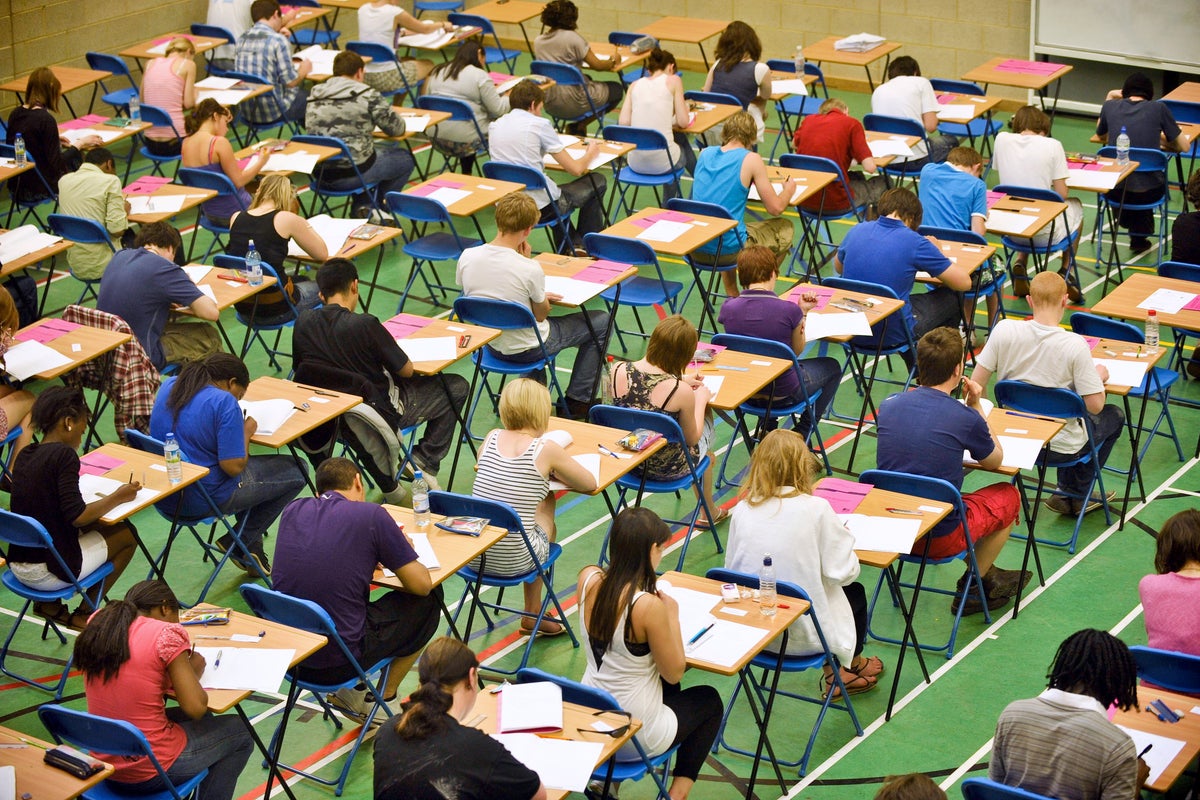
Some spin · most spun: The Independent 35/100 See every outlet’s spin ↓Photo as used by The Independent for “Pupils who use AI could lose A-level or GCSE qualifications, England’s exam regulator warns”How The Independent framed it: The Independent’s lead photo shows pupils writing at desks in an exam hall, giving the story a familiar high-stakes exam setting. It illustrates examinations generally rather than the unsupervised coursework discussed in the article.
Sir Ian Bauckham said disqualification was possible in extreme cases. He suggested schools could supervise more coursework or ask pupils to demonstrate their understanding in an examination.
How the coverage differs
The Independent leads on AI coursework and qualification loss, while The Guardian also prominently addresses wearable devices and reports 2,225 smart-device and mobile-phone cheating cases. Of the two full articles, only The Independent gives the 75 per cent and 55.4 per cent shares of plagiarism cases; neither gives the shares of all student malpractice cases. The Belfast Telegraph and ITV News provide only headlines, so their wider coverage cannot be compared.
Pupils in England who submit AI-generated coursework as their own can lose an entire GCSE or A-level in extreme cases, Ofqual’s chief regulator has warned. Sir Ian Bauckham said that the consequences for a pupil’s future could be severe. He was speaking about malpractice in work that contributes to a qualification.S1S2
Bauckham singled out extended writing that pupils complete without supervision, including coursework in English and history at A-level. Where a lengthy essay counts towards the final grade, the question for the examiner is whether the pupil wrote it and understands the material. He said Ofqual wanted to strengthen how that work is assessed.S1S2
Why it matters
Ofqual recorded 100 cases of student plagiarism involving misuse of AI in England’s summer 2025 GCSE, AS and A-level series. Those cases accounted for 75 per cent of penalised student plagiarism cases. Measured against the wider group of all student malpractice cases, their share was 2 per cent.R1
The previous summer, the regulator recorded 85 cases involving AI. Those represented 55.4 per cent of student plagiarism cases and 1.7 per cent of all student malpractice cases. The figures count reported cases that resulted in a penalty. They cannot tell pupils or teachers how many instances went undetected, or how many students used AI for other purposes.R1R2S1
The background
Bauckham said teachers’ familiarity with a pupil’s earlier work could help them spot a sudden change in the standard of a submission. He also warned that improvements in the technology could make misuse harder to detect. That concern underlies his interest in how schools establish authorship while a pupil is doing the work.S1S2
In a Teacher Tapp survey for Ofqual of more than 4,500 teachers in England, 70 per cent said unsupervised written coursework should not count towards final GCSE and A-level grades, according to the reporting. A separate question found 83 per cent favoured more supervision or other controls. The responses describe teachers’ views on assessment design.S1
What happens next
Among the options Bauckham described were closer supervision while pupils write and more emphasis on acknowledging the sources they use. Another possibility would link coursework to a written or spoken examination, giving a pupil an opportunity to show that they understand what they submitted. He presented these as possible approaches. His remarks did not set a timetable for a change in any particular subject. For a pupil selecting a course, that distinction matters because a proposal for checking authorship does not itself change the assessment requirements for an upcoming examination.S1S2
Fact check: every point labelled
What is confirmed, what is only reported, and what is claim or speculation. Every point links to its source.
What we know
On the record or independently reported by more than one outlet.
confirmedOfqual recorded 100 cases of student plagiarism involving misuse of AI in England’s summer 2025 GCSE, AS and A-level series.R1
confirmedThose cases accounted for 75 per cent of penalised student plagiarism cases.R1
confirmedMeasured against the wider group of all student malpractice cases, their share was 2 per cent.R1
confirmedThe previous summer, the regulator recorded 85 cases involving AI.R1R2
confirmedThose represented 55.4 per cent of student plagiarism cases and 1.7 per cent of all student malpractice cases.R1R2S1
confirmedThe figures count reported cases that resulted in a penalty.R1R2
confirmedThey cannot tell pupils or teachers how many instances went undetected, or how many students used AI for other purposes.R1R2
Reported but not yet confirmed
Reported as fact, but from a single origin.
reportedSir Ian Bauckham: Pupils in England who submit AI-generated coursework as their own can lose an entire GCSE or A-level in extreme cases, Ofqual’s chief regulator has warned.S1S2
reportedSir Ian Bauckham: Sir Ian Bauckham said that the consequences for a pupil’s future could be severe.S1S2
reportedSir Ian Bauckham: He was speaking about malpractice in work that contributes to a qualification.S1S2
reportedSir Ian Bauckham: Bauckham singled out extended writing that pupils complete without supervision, including coursework in English and history at A-level.S1S2
reportedSir Ian Bauckham: Where a lengthy essay counts towards the final grade, the question for the examiner is whether the pupil wrote it and understands the material.S1S2
reportedSir Ian Bauckham: He said Ofqual wanted to strengthen how that work is assessed.S1S2
reportedSir Ian Bauckham: Bauckham said teachers’ familiarity with a pupil’s earlier work could help them spot a sudden change in the standard of a submission.S1S2
reportedSir Ian Bauckham: He also warned that improvements in the technology could make misuse harder to detect.S1S2
reportedSir Ian Bauckham: That concern underlies his interest in how schools establish authorship while a pupil is doing the work.S1S2
reportedTeacher Tapp survey for Ofqual: In a Teacher Tapp survey for Ofqual of more than 4,500 teachers in England, 70 per cent said unsupervised written coursework should not count towards final GCSE and A-level grades, according to the reporting.S1
reportedTeacher Tapp survey for Ofqual: A separate question found 83 per cent favoured more supervision or other controls.S1
reportedTeacher Tapp survey for Ofqual: The responses describe teachers’ views on assessment design.S1
reportedSir Ian Bauckham: Among the options Bauckham described were closer supervision while pupils write and more emphasis on acknowledging the sources they use.S1S2
reportedSir Ian Bauckham: Another possibility would link coursework to a written or spoken examination, giving a pupil an opportunity to show that they understand what they submitted.S1S2
reportedSir Ian Bauckham: He presented these as possible approaches.S1S2
reportedSir Ian Bauckham: His remarks did not set a timetable for a change in any particular subject.S1S2
Speculation and opinion
Predictions and views, kept apart from the facts.
opinionNoDirection: For a pupil selecting a course, that distinction matters because a proposal for checking authorship does not itself change the assessment requirements for an upcoming examination.S1
Still unknown
Which subjects will change their assessment arrangements and when.
Key questions
Is losing a qualification automatic?
Bauckham described disqualification as a possible outcome in extreme cases.S1
What does 75 per cent refer to?
The share of penalised student plagiarism cases involving AI in summer 2025.R1
Could pupils be asked about an essay?
Bauckham suggested linking coursework to a written or spoken examination.S1
Spin meter
How each outlet framed this story, scored on the wording and choices in that article, not on the outlet’s reputation.
Headlines compared: The Independent stresses the possible loss of qualifications, while The Guardian frames the issue around penalties and technology-enabled cheating more broadly. The Belfast Telegraph and ITV News use the same headline, emphasising ‘life-altering’ penalties for AI-assisted coursework.
The IndependentFraming: Not political · Spin 35/100 · Headline matches story: partly
“Pupils who use AI could lose A-level or GCSE qualifications, England’s exam regulator warns”
Straight reportingHeavy spin
The Independent emphasises the risk of lost qualifications and proposed safeguards against AI misuse.
Why? 2 framing techniques
emphasiscould lose A-level or GCSE qualifications The headline foregrounds the most severe sanction, while the regulator describes losing an entire qualification as an extreme-case outcome.
omission The article gives the share of plagiarism cases involving AI but omits that they represented 2 per cent of all student malpractice cases.
The GuardianFraming: Not political · Spin 32/100 · Headline matches story: partly
“Ofqual urges ‘life-altering’ penalties for students who use tech to cheat”
Straight reportingHeavy spin
The Guardian leads on severe penalties and wearable technology, while also covering the future of coursework.
Why? 2 framing techniques
emphasisurges ‘life-altering’ penalties The headline suggests Ofqual is calling for such penalties, whereas the quoted regulator warns they can occur in extreme cases.
omission The article gives the numbers of AI plagiarism cases but omits their shares of both plagiarism and all student malpractice cases.
Belfast TelegraphFraming: Not political · Spin 20/100 · Headline matches story: unknown
“Pupils who use AI to complete coursework face ‘life-altering’ penalties – Ofqual”
Straight reportingHeavy spin
The Belfast Telegraph’s headline emphasises potentially severe penalties for AI-assisted coursework.
Why? 1 framing technique
emphasisface ‘life-altering’ penalties The headline highlights the most dramatic possible consequence without the regulator’s qualification that losing a whole qualification occurs in extreme cases.
ITV NewsFraming: Not political · Spin 20/100 · Headline matches story: unknown
“Pupils who use AI to complete coursework face ‘life-altering’ penalties – Ofqual - ITVX”
Straight reportingHeavy spin
ITV News’s headline emphasises potentially severe penalties for AI-assisted coursework.
Why? 1 framing technique
emphasisface ‘life-altering’ penalties The headline highlights the most dramatic possible consequence without the regulator’s qualification that losing a whole qualification occurs in extreme cases.
Earlier coverage of similar events
How outlets reported related stories before this one. Compare for yourself.
Help power NoDirection. Read without adverts.Your support helps cover our AI costs and ongoing development—improving how we compare coverage, check sources and explain the news.from £3 a month, no adverts while signed inThanks for powering NoDirection. You’re reading without adverts.
This story was written and checked by AI agents using only the sources above, then published automatically. Facts are labelled by how well they are supported. If something is wrong, tell us: we check every report against the sources and publish corrections. Editorial policy