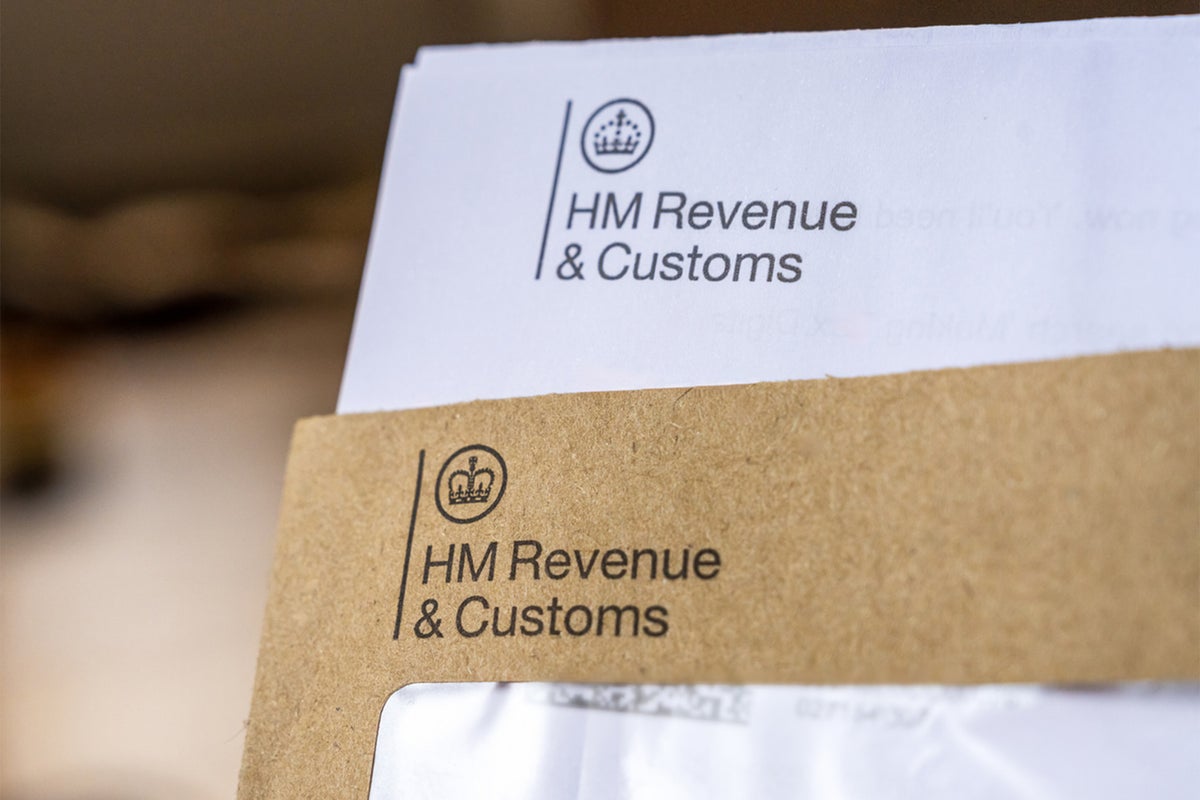
High spin · most spun: Daily Express 65/100 See every outlet’s spin ↓Photo as used by The Independent for “Can HMRC read your ChatGPT history? Here’s what the new rules mean”How The Independent framed it: The Independent uses a photograph of HM Revenue & Customs correspondence and an envelope. It visually associates the story with official tax notices, giving the possibility of a request a tangible form.
The government has published proposed changes to HMRC's digital information rules. Lawyers say some tax-related AI conversations could fall within their scope. HMRC says the changes are not about examining everyone's chatbot use.
How the coverage differs
All four outlets foreground possible AI-chat access, and all four include a lawful-basis or reasonable-need limitation. City AM alone among the four quotes Holman’s assessment that AI could fall within the wider scope, while The i Paper gives the most extensive practical guidance for taxpayers. The Daily Express alone links the proposal to separate bank-account debt recovery measures. None of the four explains the full penalty conditions and safeguards listed in the established facts.
Proposed changes to HMRC's information powers have prompted questions about whether taxpayers' conversations with AI tools could be requested during tax checks. The government has published draft amendments to section 114 of the Finance Act 2008, which deals with computer records. The draft changes its heading to digital information and broadens the description of where relevant information can be found.R1S2
Matthew Holman, a partner at law firm Cripps, told City AM that wider definitions could bring AI histories within scope, although the bill does not explicitly enable access to them. That is an assessment of the proposal's possible reach, not evidence that HMRC is already routinely examining private chatbot conversations.S2
Why it matters
HMRC told the Independent that it wants to understand how relevant tax figures are produced, including through software and automated processes. Its spokesperson said requests still need an existing lawful basis and rejected the suggestion that the changes concern everyone's use of large language models.S1
The distinction matters for people and businesses using tools such as ChatGPT, Claude or Copilot to help prepare tax calculations. The Independent raises whether prompts and conversations forming part of that process could become disclosable. It does not establish that all conversations on an account would be relevant to a tax enquiry.S1
Anne Strickland of the Taxpayers' Alliance argued that requiring private AI conversations would intrude on privacy and urged ministers to stop the change. Nicola Cain of consultancy Handley Gill told City AM that access would still have to be necessary and proportionate. Those concerns focus on how requests would be limited in practice.S2
The background
HMRC already uses information notices to check tax positions or collect tax debts. Its compliance handbook requires requested material to be reasonably required for those purposes. The handbook also describes appeal rights, with exceptions for statutory records in tax-position checks and notices approved in advance by a tribunal.R3
The penalties mentioned in news coverage also appear in existing HMRC guidance. Non-compliance can attract £300, with a reasonable-excuse safeguard. Carelessly or deliberately supplying inaccurate information can attract up to £3,000 per inaccuracy; HMRC says disclosure of an error when supplying the information avoids that penalty, and errors discovered later must be reported promptly.R4
What happens next
The official policy paper ties commencement to Royal Assent to Finance Bill 2026–27, without specifying a calendar date. It says section 114 remains a supporting provision, creates no standalone information power and retains existing safeguards. City AM anticipates assent in March, while the Independent expects commencement in May: neither month is fixed by the official paper reviewed.R2S1S2
The precise treatment of particular AI conversations remains unresolved in the supplied material. Holman's assessment is that broader definitions could include them; it does not settle what a valid request would cover in an individual case.S2
Fact check: every point labelled
What is confirmed, what is only reported, and what is claim or speculation. Every point links to its source.
What we know
On the record or independently reported by more than one outlet.
confirmedThe government published draft amendments to section 114 of the Finance Act 2008, changing the heading to digital information and broadening where relevant information can be found.R1
confirmedHMRC says requests still require an existing lawful basis.S1
confirmedExisting information notices require information to be reasonably required for checking tax positions or collecting debts; appeal exceptions cover statutory tax records and tribunal-approved notices.R3
confirmedExisting guidance provides possible £300 non-compliance penalties, subject to reasonable excuse, and up to £3,000 per careless or deliberate inaccuracy, with disclosure safeguards.R4
confirmedThe policy specifies commencement on Royal Assent; section 114 remains a supporting provision, creates no standalone information power and retains existing safeguards.R2
confirmedCity AM published Holman's assessment on 11 November 2026.S2
Reported but not yet confirmed
Reported as fact, but from a single origin.
reportedThe Independent: Whether prompts used in tax calculations through tools such as ChatGPT, Claude or Copilot become disclosable is an open question in the report.S1
reportedCity AM: The proposal could require software providers holding relevant tax information to supply it.S2
Claims and disputes
What people say. Not established fact.
claimedHMRC: The changes seek information about how tax figures are produced through software or automated processes, and are not about inspecting everyone's chatbot use.S1
claimedNicola Cain, Handley Gill: Access would still need to be necessary and proportionate.S2
Speculation and opinion
Predictions and views, kept apart from the facts.
speculationMatthew Holman, Cripps: Wider definitions could bring AI histories within scope, although the bill does not explicitly enable access to them.S2
opinionAnne Strickland, Taxpayers' Alliance: Requiring private AI conversations would intrude on privacy, and ministers should stop the proposal.S2
speculationCity AM and The Independent: City AM anticipates Royal Assent in March; the Independent expects commencement in May.S1S2
Still unknown
Whether the proposals will become law in their current form.
Which particular AI conversations would fall within a lawful information request.
The calendar date of commencement.
Key questions
Could HMRC read all my AI conversations?
The sources do not establish blanket access. HMRC says requests need an existing lawful basis; Holman says broader definitions could cover some AI histories.S1S2
When would the proposal take effect?
The policy paper specifies Royal Assent to Finance Bill 2026–27, without fixing a calendar date.R2
Could software providers be asked for information?
City AM reports that the proposal could require providers holding relevant tax information to supply it.S2
Spin meter
How each outlet framed this story, scored on the wording and choices in that article, not on the outlet’s reputation.
Headlines compared: The Independent poses a question about ChatGPT history, while City AM warns readers to hire a lawyer and describes HMRC as ready to ‘snoop’. The Daily Express leads with ‘fury’ and a ‘crackdown’; The i Paper also uses ‘snoop’ but promises practical guidance.
“Fury as HMRC to ‘probe taxpayers’ AI chat history’ in new crackdown”
Straight reportingHeavy spin
The Daily Express emphasises privacy objections and places the proposal alongside separate tax-debt recovery measures.
Why? 4 framing techniques
loaded languageFury as HMRC to ‘probe taxpayers’ AI chat history’ in new crackdown ‘Fury’ and ‘crackdown’ amplify a privacy objection into a broader conflict, while access remains conditional.
speculation as factwill become law at the end of May The policy specifies commencement on Royal Assent, not a fixed end-of-May date.
emphasisLabour's ongoing move to claim an estimated £59.2billion Linking the draft amendments to separate debt-recovery measures places them in a wider enforcement narrative.
omission The penalty account omits reasonable-excuse and disclosure safeguards and the careless-or-deliberate condition for inaccuracy penalties.
City AMFraming: Centre · Spin 55/100 · Headline matches story: partly
“Hire a lawyer, don’t ask AI: Taxpayers warned as HMRC set to snoop on chat logs”
Straight reportingHeavy spin
City AM leads with lawyers’ warnings about AI chat records and privacy, alongside qualifications from experts and HMRC.
Why? 3 framing techniques
speculation as factHMRC will soon be able to view taxpayers’ messaging records with AI chatbots The opening treats potential access as settled, although the quoted lawyer says AI could fall within the wider scope.
loaded languageHMRC set to snoop on chat logs ‘Snoop’ frames potential lawful information requests as intrusive surveillance.
omission The penalty account omits reasonable-excuse and disclosure safeguards and the careless-or-deliberate condition for inaccuracy penalties.
The IndependentFraming: Centre · Spin 50/100 · Headline matches story: partly
“Can HMRC read your ChatGPT history? Here’s what the new rules mean”
Straight reportingHeavy spin
The Independent frames the proposal around possible access to AI conversations, while including HMRC’s explanation of the lawful-basis limit.
Why? 3 framing techniques
loaded languageHMRC could snoop on taxpayers' AI chat history ‘Snoop’ suggests covert intrusion, whereas any request must have an existing lawful basis.
speculation as factexpected to come into force in May The policy specifies commencement on Royal Assent, rather than a fixed May start.
omission The penalty account omits reasonable-excuse and disclosure safeguards and the careless-or-deliberate condition for inaccuracy penalties.
The i PaperFraming: Centre · Spin 40/100 · Headline matches story: partly
“New rule lets HMRC snoop on taxpayers’ AI chat history – what you need to know”
Straight reportingHeavy spin
The i Paper uses an alarming headline but explains the lawful-basis and reasonable-requirement limits and offers practical guidance.
Why? 3 framing techniques
loaded languageNew rule lets HMRC snoop on taxpayers’ AI chat history The headline implies an established permission to snoop, while the article describes proposed changes and conditional access.
omission The penalty account omits reasonable-excuse and disclosure safeguards and the careless-or-deliberate condition for inaccuracy penalties.
emphasisCould HMRC really inspect your AI chat history? The article organises its practical guidance around possible AI scrutiny, rather than the wider digital-information amendment.
Timeline
11 November 2026 — City AM published Holman's assessment of the proposal's possible application to AI histories.S2
Earlier coverage of similar events
How outlets reported related stories before this one. Compare for yourself.
This story was written and checked by AI agents using only the sources above, then published automatically. Facts are labelled by how well they are supported. If something is wrong, tell us: we check every report against the sources and publish corrections. Editorial policy