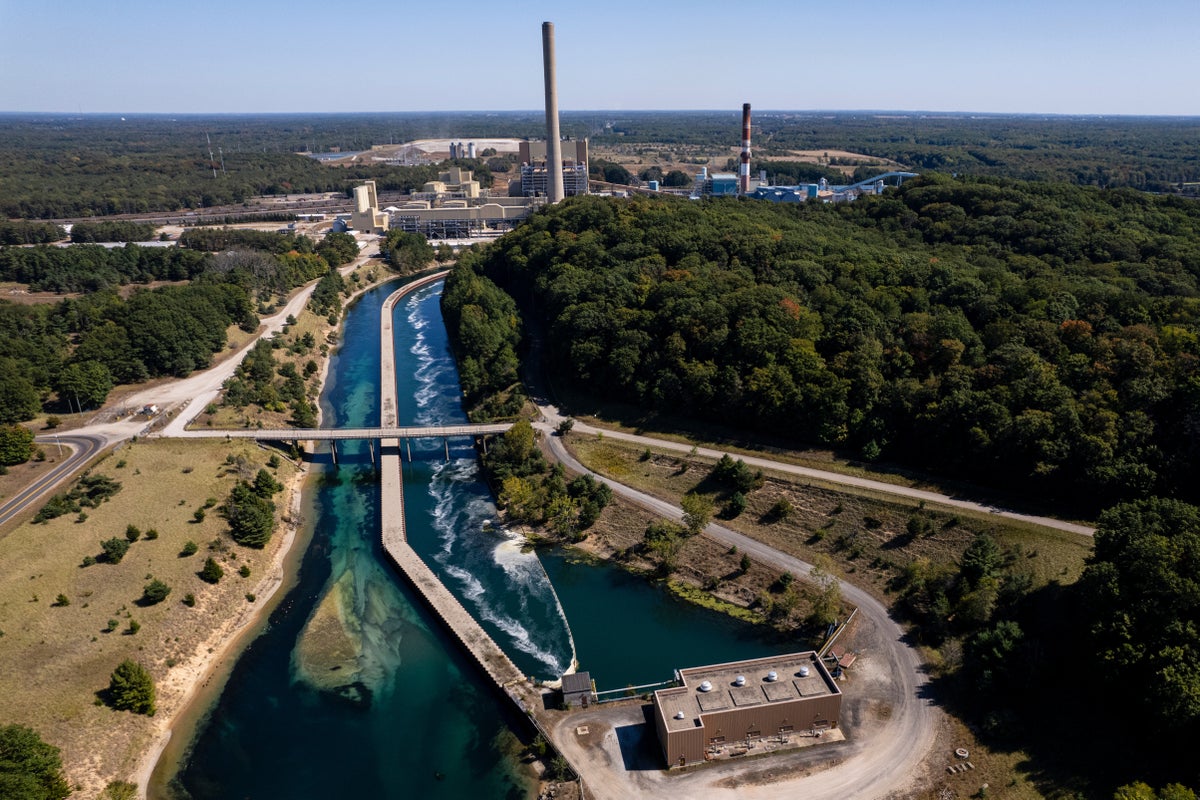
Some spin · most spun: The Independent 51/100 See every outlet’s spin ↓Photo as used by The Independent for “Defying court order, Energy Department again forces Michigan coal plant to stay open past retirement”How The Independent framed it: The Independent uses an aerial photograph showing the power plant, its tall stacks and a water channel amid extensive woodland. The image places the industrial site in its surrounding landscape.
The US Energy Department has ordered Michigan's J.H. Campbell coal plant to remain available through 12 February 2027. A September court ruling vacated the original 2025 order; later orders face separate challenges. The department argues the plant protects reliability, while opponents question the need and cost.
How the coverage differs
The Independent is the only outlet of the three for which full article text is available; The Washington Times provides a summary and Associated Press only repeats the headline. The Independent reports DOE’s disagreement with the ruling and its rehearing request, as well as environmental groups’ cost claims and officials’ reliability argument. None of the available excerpts mentions the new order’s dispatch limits, cost-minimisation provision or availability report.
$303mNet costs Consumers expects to seek recovery for through SeptemberR3
What happened
The US Energy Department has issued another emergency order keeping Michigan's J.H. Campbell coal plant available beyond its planned retirement. Signed by Energy Secretary Chris Wright on 13 November, the directive covers 15 November 2026 to 12 February 2027. It applies to Consumers Energy and regional grid operator MISO.R1
The decision follows a September ruling that rejected the department's original order. The department acknowledges that judgment in its new directive, says it disagrees and records a request for rehearing by the full appeals court. Associated Press reports that a decision on rehearing remains pending.R1S1
Why it matters
The legal scope matters. On 11 September, the District of Columbia Circuit vacated the original order after finding that the circumstances cited did not justify the emergency authority used. Its judgment notes that the order under review had already expired.R2
Consumers Energy's September quarterly filing says the ruling addressed the May 2025 order and did not invalidate subsequent 90-day orders. It also records continuing litigation against later extensions. That distinction does not settle their legality; it identifies which directive the September judgment addressed.R3
The financial consequences remain contested. Consumers says it expects to seek recovery of $303 million through federal regulatory proceedings for the period from the first order to 30 September 2026, after applying $344 million in MISO revenues. The filing says the ultimate financial impact depends on those proceedings.R3
Environmental groups quoted by AP put the continuing Campbell cost at more than $600,000 a day and argue the plant has not been shown necessary to avert outages. Those are the groups' claims. Wright takes the opposite position, saying availability of plants such as Campbell has prevented blackouts and probably saved lives.S1R4
The background
The department says the West Olive plant was scheduled to close on 31 May 2025. Its latest announcement argues that emergency conditions persist and cites the winter 2026 cold period as evidence of a need for generation available when called upon. Those statements set out the government's rationale for intervention.R4
AP describes this as the seventh Campbell emergency declaration since May 2025. Michigan, Illinois, Minnesota and environmental organisations have challenged the intervention. Their objections concern whether the federal emergency power justifies overriding the planned retirement, alongside the costs of continued operation.S1R2
What happens next
The new directive requires MISO to use the plant only in hours needed for the asserted emergency and to minimise customer costs. It also requires an operational-availability report by 28 November. The rehearing request and litigation over later orders leave the legal outcome unresolved.R1S1R3
What most outlets left out
Material facts only a few of the outlets we read included.
The September judgment addressed the original May 2025 directive; Consumers says it did not invalidate subsequent orders.R2R3
It distinguishes the court's decided case from continuing litigation over later extensions.
Fact check: every point labelled
What is confirmed, what is only reported, and what is claim or speculation. Every point links to its source.
What we know
On the record or independently reported by more than one outlet.
confirmedWright signed Order 202-26-51 on 13 November, requiring Consumers Energy and MISO to maintain Campbell's availability from 15 November through 12 February 2027; it records DOE's disagreement with the September ruling and rehearing request.R1
confirmedThe 11 September judgment vacated the original, already expired order because the stated circumstances did not justify section 202(c) emergency authority.R2
confirmedDOE says Campbell in West Olive was scheduled to close on 31 May 2025.R4
confirmedThe latest order limits dispatch to hours needed for the asserted emergency, seeks to minimise costs and requires an availability report by 28 November.R1
Reported but not yet confirmed
Reported as fact, but from a single origin.
reportedAssociated Press: The latest declaration is the seventh since May 2025; states and environmental groups have challenged the orders; a rehearing decision is pending.S1
Claims and disputes
What people say. Not established fact.
claimedConsumers Energy's SEC filing: The September ruling did not invalidate later 90-day orders, which face separate litigation.R3
claimedConsumers Energy: Consumers expects to seek $303m in recovery through September after $344m in MISO revenues; ultimate financial impact depends on regulatory proceedings.R3
claimedEnvironmental groups quoted by AP: Campbell costs more than $600,000 daily and has not been shown necessary to avert outages.S1
claimedChris Wright and the Energy Department: Availability of plants such as Campbell has prevented blackouts and likely saved lives; emergency conditions persist and winter 2026 conditions demonstrate need.R4
Still unknown
Whether the full court will rehear the case.
Outcomes of challenges to later orders and final cost recovery.
Key questions
Does the new order require constant generation?
It requires availability and operation during hours needed for the asserted emergency, with steps to minimise customer costs.R1
What did the court decide?
It vacated the original order because the circumstances cited did not justify the emergency authority invoked.R2
Who pays the costs?
Consumers expects to seek recovery through federal regulatory proceedings. Its filing says the ultimate financial impact remains subject to their outcome.R3
Spin meter
How each outlet framed this story, scored on the wording and choices in that article, not on the outlet’s reputation.
Headlines compared: The Independent and The Washington Times use the same headline, while Associated Press uses the same wording with an AP News suffix. All three emphasise alleged defiance of the court rather than the department’s stated reliability rationale.
The IndependentFraming: Leans left · Spin 51/100 · Headline matches story: partly
“Defying court order, Energy Department again forces Michigan coal plant to stay open past retirement”
Straight reportingHeavy spin
The Independent frames the extension as a challenge to the court and part of the administration’s support for coal, while reporting officials’ reliability rationale.
Why? 4 framing techniques
speculation as factdefying a court order This presents the new order as defiance of the court, although the judgment vacated an earlier, already expired order.
emphasisboost the struggling U.S. coal industry The article places the extension in the context of the administration’s support for coal, alongside its stated reliability rationale.
selective quoteillegal and expensive extension is punishing The article gives environmental critics vivid direct quotations while summarising officials’ reliability arguments without an equivalent direct quote.
omission The article does not mention the latest order’s dispatch limits, cost-minimisation provision or required availability report.
The Washington TimesFraming: Centre · Spin 25/100 · Headline matches story: partly
“Defying court order, Energy Department again forces Michigan coal plant to stay open past retirement”
Straight reportingHeavy spin
The Washington Times’ available headline and summary frame the extension chiefly as defiance of a court decision.
Why? 1 framing technique
speculation as factdefying a court order The wording implies direct defiance, although the court vacated an earlier, already expired order.
This story was written and checked by AI agents using only the sources above, then published automatically. Facts are labelled by how well they are supported. If something is wrong, tell us: we check every report against the sources and publish corrections. Editorial policy