L 73% · C 18% · R 9%11 outletsBlindspot: few right-leaning outlets covering this
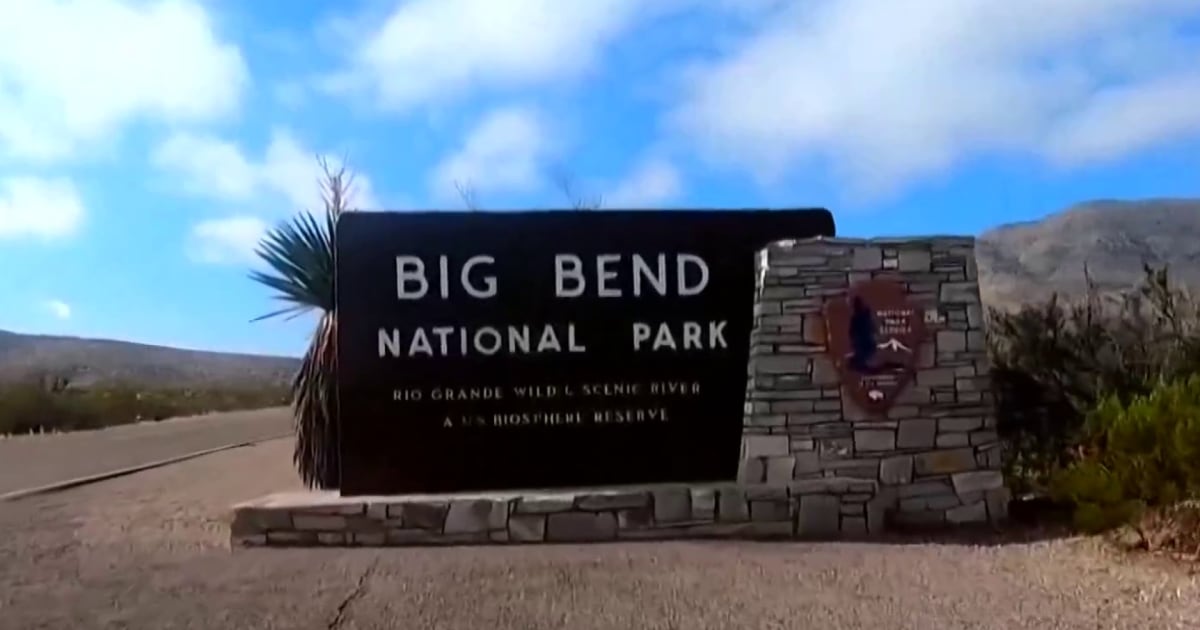
Some spin · most spun: ABC News 30/100 See every outlet’s spin ↓Photo as used by NBC News for “Supreme Court clears way for border wall construction in Big Bend area in Texas”How NBC News framed it: NBC News uses a photograph of the Big Bend National Park entrance sign against a desert and mountain landscape. It places the park and its scenery at the centre of a story whose construction programme also extends beyond park land.
The US Supreme Court on 9 November stayed an injunction blocking border construction in Texas’s Big Bend region. Justice Ketanji Brown Jackson was the only justice who indicated she would deny the request. The order allows work to proceed but does not settle the underlying legal challenge.
How the coverage differs
Of the five sources with substantive article text, ABC News, Al Jazeera and The Independent give particular attention to local or environmental opposition, while Fox News gives more space to the administration’s security rationale. CBS News quotes extensive warnings of irreversible harm from both the government and plaintiffs. Among those five, only Al Jazeera explicitly identifies the Court’s major-questions jurisdictional reasoning; ABC News reports the jurisdiction issue without naming that doctrine. Fox News alone among the five notes that the planned park barrier will not use the 30-foot pedestrian fencing planned elsewhere.
Nearly $500,000 a dayUnrecoverable expenses attributed to the injunction by a CBP officialR3
568,104Recreational visits to Big Bend National Park in 2025, not distinct visitorsR5
388,290Recreational visits to Big Bend National Park in 2016R5
What happened
The US Supreme Court has allowed the Trump administration to resume construction of border barriers, roads and related infrastructure in Texas’s Big Bend region. Its order on 9 November suspended an injunction issued by US District Judge Kathleen Cardone in October while litigation continues. Justice Ketanji Brown Jackson indicated she would have denied the government’s request, without giving written reasons.S4S9S10R2
The construction programme extends beyond Big Bend National Park to state and private land. Although several headlines describe a wall through the park, ABC News reports that plans inside the park changed after public opposition to vehicle barriers, roads and surveillance technology. Fox News also reports that the park’s planned barrier will not use the 30-foot steel pedestrian fencing proposed elsewhere.S2S4S5S7S9
Why it matters
The order turns principally on the district court’s power to hear a particular legal argument, rather than a final assessment of the construction programme. The Supreme Court said the government was highly likely to establish that the lower court lacked jurisdiction over the plaintiffs’ major-questions claim. It described that doctrine as a rule for interpreting legislation, not a constitutional claim.R1
Both sides warned of irreversible consequences: the government from halting construction, and the plaintiffs from allowing it to proceed before a final judgment. Solicitor General D. John Sauer argued that stopping work would weaken border security and risk directing crossings and trafficking towards Big Bend. The plaintiffs argued that damage to habitats, historic resources, private property and livelihoods could not be undone by a later ruling.S10
The Court also relied in part on a Customs and Border Protection official’s declaration that the injunction was causing nearly $500,000 a day in unrecoverable expenses. That figure is the government official’s assessment cited in the order, rather than an independently established final cost.R3
The background
The plaintiffs include the Center for Biological Diversity, Friends of the Ruidosa Church and a local river guide and landowner. Their lawsuit challenges Department of Homeland Security waivers used to bypass environmental and conservation requirements. A 1996 immigration law gives the department’s secretary waiver powers for expedited border construction and restricts district-court challenges to constitutional claims.S4S7S10
The plaintiffs’ filing also raises separate constitutional arguments involving nondelegation, presentment, presidential execution of the law and due process. Those claims are distinct from the major-questions argument addressed in the stay order. National Park Service records provide another measure of the area’s use: Big Bend National Park recorded 568,104 recreational visits in 2025, up from 388,290 in 2016; these are visits, not distinct visitors.R1R4R5
What happens next
The government asked for either a stay or summary reversal; the Court granted a stay. Under its terms, the stay expires if a timely petition for review is denied, or when the Court issues its judgment if review is granted. The ruling therefore permits construction during further proceedings without finally resolving the lawsuit.R2S10
What most outlets left out
Material facts only a few of the outlets we read included.
The plaintiffs raised several constitutional claims distinct from the major-questions argument addressed in the stay order.R1R4
The order’s treatment of one argument does not describe the full scope of the lawsuit.
The stay expires if a timely petition for review is denied, or when the Court issues its judgment if review is granted.R2
The order is interim relief with specified end points, not a final resolution of the case.
National Park Service records show 568,104 recreational visits in 2025, compared with 388,290 in 2016.R5
The figures put the park’s recreational use in proportion, although they do not count distinct visitors or measure economic effects.
Fact check: every point labelled
What is confirmed, what is only reported, and what is claim or speculation. Every point links to its source.
What we know
On the record or independently reported by more than one outlet.
confirmedThe Supreme Court stayed an injunction blocking border construction in Texas’s Big Bend region on 9 November 2026.S4S9S10R2
confirmedThe order allows construction of border barriers, roads and related infrastructure to resume while litigation continues.S10R2
confirmedUS District Judge Kathleen Cardone issued the injunction in October.S4S10
confirmedJustice Ketanji Brown Jackson was the only justice who indicated she would deny the government’s request and did not give written reasons.S4S9R2
confirmedThe construction programme extends beyond Big Bend National Park to state and private land.S7S9S10
confirmedSeveral news headlines describe wall construction through Big Bend National Park.S4S5
confirmedThe Supreme Court said the government was highly likely to establish that the district court lacked jurisdiction over the plaintiffs’ major-questions claim.R1
confirmedThe Supreme Court described the major-questions doctrine as a rule of statutory interpretation rather than a constitutional claim.R1
confirmedThe stay order did not finally resolve the underlying lawsuit.R2S10
confirmedThe government warned of irreversible consequences from halting construction, while the plaintiffs warned of irreversible consequences from allowing it before final judgment.S10
confirmedThe Supreme Court relied in part on the CBP official’s declaration about daily expenses.R3
confirmedThe daily expense figure is an official’s assessment cited by the Court, not an independently established final cost in the supplied evidence.R3
confirmedThe plaintiffs include the Center for Biological Diversity, Friends of the Ruidosa Church and a local river guide and landowner.S4S7
confirmedThe lawsuit challenges Homeland Security waivers used to bypass environmental and conservation requirements.S4S10
confirmedA 1996 immigration law gives the Homeland Security secretary waiver powers for expedited border construction and restricts district-court challenges to constitutional claims.R1S4S10
confirmedThe plaintiffs’ filing raises nondelegation, Presentment Clause, Take Care Clause and Fifth Amendment due-process claims.R4
confirmedThose constitutional claims are distinct from the major-questions claim addressed in the stay order.R1R4
confirmedBig Bend National Park recorded 568,104 recreational visits in 2025 and 388,290 in 2016.R5
confirmedRecreational visits are not a count of distinct visitors.R5
confirmedThe government requested either a stay or summary reversal, and the Supreme Court granted a stay.R2
confirmedThe stay expires if a timely petition for review is denied, or when the Supreme Court issues its judgment if review is granted.R2
Reported but not yet confirmed
Reported as fact, but from a single origin.
reportedABC News: Plans inside Big Bend National Park changed after public opposition to vehicle barriers, roads and surveillance technology.S2
reportedFox News, citing administration officials: The park’s planned barrier will not use the 30-foot steel pedestrian fencing proposed elsewhere.S9
Claims and disputes
What people say. Not established fact.
claimedSolicitor General D. John Sauer: Stopping construction would weaken border security and risk directing unlawful crossings and trafficking towards Big Bend.S10
claimedThe plaintiffs: Construction would cause damage to habitats, historic resources, private property and livelihoods that a later judgment could not undo.S10
claimedA US Customs and Border Protection official: The injunction was causing nearly $500,000 a day in unrecoverable expenses.R3
Context the headlines leave out
The Court’s jurisdictional assessment concerned the major-questions claim. The plaintiffs’ filing also contains distinct constitutional claims under nondelegation principles, the Presentment and Take Care clauses, and the Fifth Amendment’s Due Process Clause.R1R4
The government sought either a stay or summary reversal. The Court granted a stay, with its duration tied to whether a timely petition for review is denied or results in a judgment.R2
The nearly $500,000 daily expense figure came from a CBP official’s declaration on which the Court relied in part.R3
The wider regional construction programme should be distinguished from plans inside the national park. ABC News reports that the park plans changed to vehicle barriers, roads and surveillance technology; Fox News reports that the park will not have the 30-foot steel pedestrian fencing proposed elsewhere.S2S9
National Park Service visitation figures count recreational visits, not distinct visitors.R5
Similar past cases
For comparison only. Every case is different.
Trump v. Sierra Club (2019): The Supreme Court stayed a permanent injunction, allowing border-barrier construction to proceed while the government appealed.P1
Both cases involved emergency stays allowing contested border construction, but the earlier dispute concerned redirected Defence Department funding and the plaintiffs’ ability to challenge spending, not Big Bend environmental-law waivers.
Center for Biological Diversity v. Wolf (2020): The Supreme Court denied the challengers’ petition for review; that denial was not a ruling on the merits.P2
Both disputes concerned Homeland Security’s waiver authority, but the earlier case involved different waiver determinations and ended with a denial of review rather than an emergency stay.
El Paso County v. Trump (2020): The Fifth Circuit vacated an injunction against using military-construction funds for the wall and ordered dismissal because the plaintiffs lacked standing.P3
Both cases involved threshold jurisdictional issues, but the earlier dispute concerned standing and Defence Department spending rather than the legal character of a major-questions challenge to environmental waivers.
Still unknown
When construction will resume at individual sites.
Whether the Supreme Court will grant a petition for review.
How the plaintiffs’ other constitutional claims will be resolved.
What the final construction costs and effects on individual properties will be.
Key questions
Did the Supreme Court finally approve the Big Bend construction programme?
No. It stayed a lower-court injunction, allowing construction to proceed while litigation continues. The order did not finally resolve the lawsuit.R2S10
Will a 30-foot steel wall be built inside Big Bend National Park?
ABC News reports that plans inside the park changed to vehicle barriers, roads and surveillance technology. Fox News also reports that the park’s planned barrier will not use the 30-foot steel pedestrian fencing proposed elsewhere.S2S9
Why did the Supreme Court lift the injunction?
The Court said the government was highly likely to succeed in arguing that the district court lacked jurisdiction over the major-questions claim. It treated that argument as a matter of statutory interpretation, not a constitutional violation.R1
Who brought the lawsuit?
The plaintiffs include the Center for Biological Diversity, Friends of the Ruidosa Church and a local river guide and landowner. They challenged Homeland Security waivers used to bypass environmental and conservation requirements.S4S7S10
How long does the stay last?
It expires if a timely petition for Supreme Court review is denied. If review is granted, it lasts until the Court issues its judgment.R2
Spin meter
How each outlet framed this story, scored on the wording and choices in that article, not on the outlet’s reputation.
Headlines compared: Al Jazeera and the Financial Times foreground construction in a national park, while NBC News, ABC News, Associated Press and CBS News describe the broader Big Bend area or region. Fox News explicitly calls the resumption temporary, and The Independent calls the project controversial; The New York Times and NPR use shorter descriptions of the ruling.
“Supreme Court lifts pause on border construction in Big Bend, Texas”
Straight reportingHeavy spin
ABC News explains the ruling while emphasising local opposition, environmental concerns and the effects on a landowner.
Why? 2 framing techniques
emphasisIt's devastating for me. The landowner’s personal account foregrounds the human costs of the project, although the article also reports the government’s rationale.
selective quoteThis horrific decision clears the way for contractors to bulldoze pristine desert The lengthy closing quotation gives opponents’ most emotive assessment particular prominence.
The IndependentFraming: Leans left · Spin 30/100 · Headline matches story: yes
“Supreme Court greenlights Trump's controversial Big Bend border wall construction”
Straight reportingHeavy spin
The Independent frames the stay as a setback for bipartisan opponents and gives prominence to environmental and local objections.
Why? 3 framing techniques
loaded languagecontroversial Big Bend border wall construction The headline labels the project controversial, foregrounding opposition to it.
selective quotethe permanent destruction of the wildest place in Texas A lengthy, emotive quotation gives opponents a prominent final assessment, though the administration’s arguments are also reported.
omission The article does not explain that the Court’s jurisdictional assessment concerned the major-questions claim, distinct from the plaintiffs’ constitutional claims.
Fox NewsFraming: Leans right · Spin 30/100 · Headline matches story: yes
“SCOTUS allows Trump admin to temporarily resume border construction in Texas' Big Bend”
Straight reportingHeavy spin
Fox News emphasises the temporary stay and the administration’s security case, with an accompanying segment description promoting a tougher enforcement frame.
Why? 3 framing techniques
emotional appealtragic cases of criminal illegal aliens The accompanying segment description invokes crime and fatalities to support a stronger-border-security frame.
loaded languageactivist judges appointed under Democratic administrations The segment description uses a politically charged label for judges who blocked enforcement efforts.
omission The article identifies the plaintiffs and their claims but does not include their warning of irreversible environmental and property harms.
Al JazeeraFraming: Leans left · Spin 25/100 · Headline matches story: partly
“US Supreme Court allows border wall in Big Bend National Park to proceed”
Straight reportingHeavy spin
Al Jazeera centres the national park and environmental objections while explaining the Court’s jurisdictional reasoning and the administration’s security rationale.
Why? 2 framing techniques
emphasisthrough a remote section of Big Bend National Park The park-centred framing gives less attention to the programme’s wider reach onto state and private land.
omission The article does not mention the plaintiffs’ separate constitutional claims, potentially leaving the impression that the major-questions claim was their whole case.
CBS NewsFraming: Centre · Spin 15/100 · Headline matches story: yes
“Supreme Court allows border wall construction in Big Bend region”
Straight reportingHeavy spin
CBS News presents the temporary ruling with extensive competing warnings about security and environmental harms.
Why? 2 framing techniques
selective quoteThis horrific decision clears the way for contractors to bulldoze pristine desert CBS News prominently quotes an opponent’s emotive response, alongside detailed arguments from both the government and plaintiffs.
omission The supplied text does not explain the Court’s specific jurisdictional reasoning on the major-questions claim.
“Supreme Court lets Trump build border wall through Texas national park”
Straight reportingHeavy spin
The Financial Times’s headline stresses construction through a national park; no article text is supplied.
Why? 1 framing technique
emphasisthrough Texas national park The headline highlights the national park rather than the wider construction programme, without identifying the stay as temporary.
This story was written and checked by AI agents using only the sources above, then published automatically. Facts are labelled by how well they are supported. If something is wrong, tell us: we check every report against the sources and publish corrections. Editorial policy