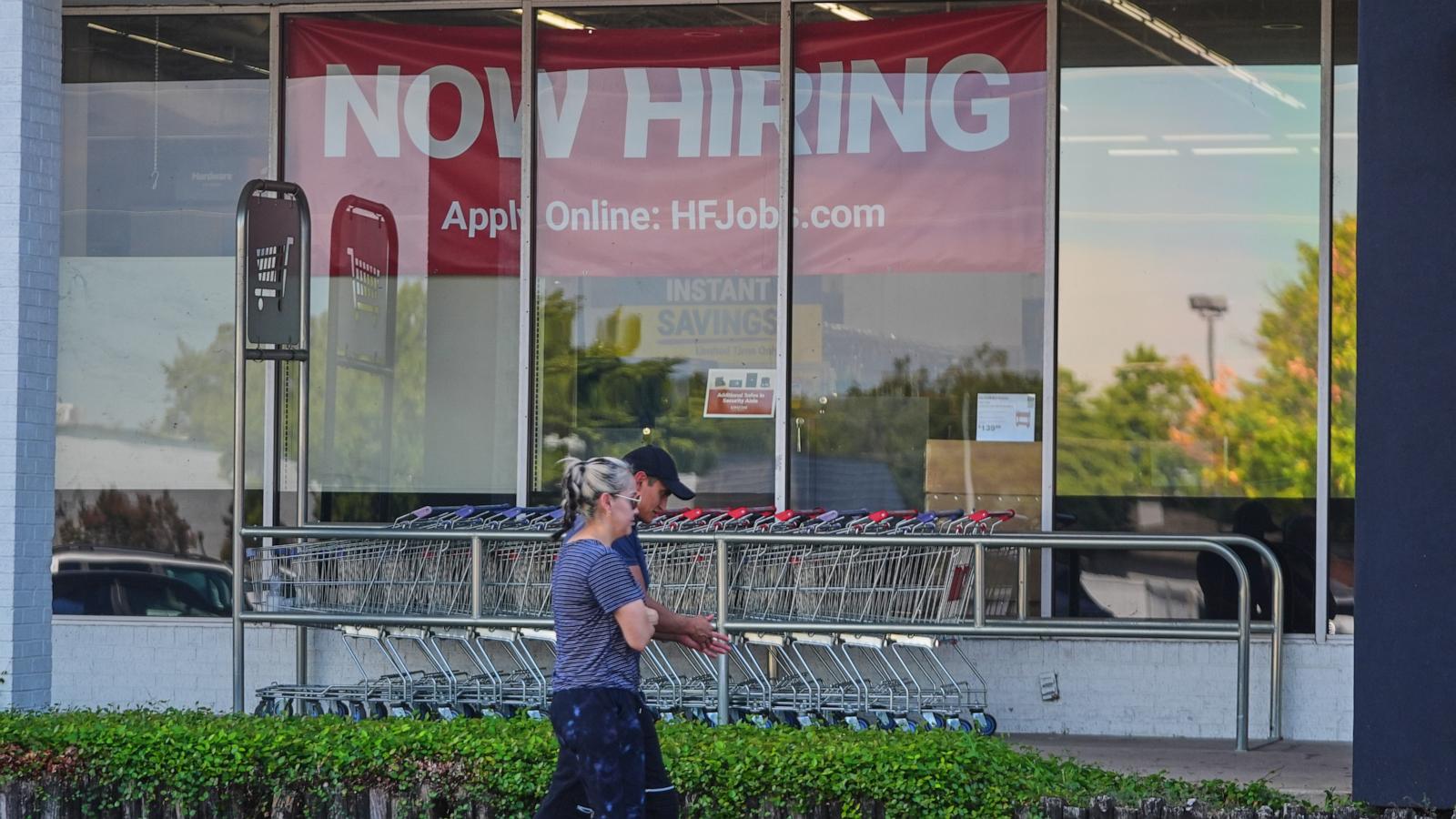
The US Labor Department reported 200,000 initial unemployment benefit claims for the week ending 7 November. That was 9,000 above the revised previous week. The four-week average remained 195,250.
What happened
US applications for unemployment benefits rose to 200,000 in the week ending 7 November, the Labor Department reported on Thursday. The seasonally adjusted total was 9,000 higher than the revised previous week. The four-week average, which reduces the influence of individual weekly movements, was unchanged at 195,250.R1S2
The comparison incorporates a revision: the earlier week's total was increased from 189,000 to 191,000. AP reported that economists had expected 195,000 claims in the latest week. That forecast describes expectations before the release, rather than a separate estimate of how many applications were reported.R1S2
Why it matters
Initial claims provide an early indication of emerging unemployment, according to the Labor Department. They differ from continued claims by people seeking benefits after their initial application. The latest release put seasonally adjusted insured unemployment at 1,697,000 for the week ending 31 October, down 20,000; that series covers an earlier week.R1R2
Benefit applications are also different from a count of everyone who is unemployed. State programmes apply eligibility rules, including requirements concerning previous earnings or work, and the circumstances in which employment ended. The broader monthly unemployment measure comes from a household survey, while payroll employment comes from a separate survey of establishments. Each state runs its own programme within federal guidelines.R3R4
The background
AP reported that initial claims had remained at or below 200,000 for nine consecutive weeks and had not exceeded 230,000 during the year. Its account described applications as historically low. The reports supplied by ABC and The Independent reproduce the same agency account, so they do not constitute separate confirmation of those historical comparisons.S2S3
The monthly jobs report gives a different view of the labour market. The Bureau of Labor Statistics reported an increase of 165,000 nonfarm payroll jobs in October and an unemployment rate of 4.1%. Those figures describe employment and unemployment across the economy, rather than the weekly flow of benefit applications.R3R2
AP put average monthly job growth this year at 86,000, compared with 9,700 in 2025. Its report linked the earlier weakness to high interest rates and uncertainty around trade policy. That explanation is the agency's assessment; the weekly claims figures alone do not establish why employers hired or dismissed particular workers.S2
What happens next
The claims release labels the newest figures as advance estimates and revises earlier totals. The next monthly employment report, covering November, is scheduled for 4 December at 8.30am Eastern time. Neither release establishes the direction of the next weekly claims figure.R1R3
Spin meter
How each outlet framed this story, scored on the wording and choices in that article, not on the outlet’s reputation.
Headlines compared: All four headlines use the same substantive wording: claims rose to 200,000 but remained low by historical standards. The Associated Press headline adds the AP News name, while The Washington Times uses a punctuated abbreviation for the US.
ABC NewsFraming: Not political · Spin 20/100 · Headline matches story: yes
“US jobless claims tick up to 200,000 but remain low by historic standards”
Straight reportingHeavy spin
ABC News uses the AP account to frame the rise as modest within a historically low-claims labour market.
Why? 3 framing techniques
emphasismost workers enjoy unusual job security
The account draws a broad conclusion about job security from low claims and other labour-market context.
loaded languagePresident Donald Trump’s unpredictable trade policies
The adjective characterises the policies while the article attributes weaker hiring partly to them.
omission The account does not mention eligibility restrictions that limit what initial benefit claims reveal about unemployment.
The IndependentFraming: Not political · Spin 20/100 · Headline matches story: yes
“US jobless claims tick up to 200,000 but remain low by historic standards”
Straight reportingHeavy spin
The Independent reproduces the AP account, framing the rise as modest within a historically low-claims labour market.
Why? 3 framing techniques
emphasismost workers enjoy unusual job security
The account draws a broad conclusion about job security from low claims and other labour-market context.
loaded languagePresident Donald Trump’s unpredictable trade policies
The adjective characterises the policies while the article attributes weaker hiring partly to them.
omission The account does not mention eligibility restrictions that limit what initial benefit claims reveal about unemployment.
The Washington TimesFraming: Not political · Spin 10/100 · Headline matches story: yes
“U.S. jobless claims tick up to 200,000 but remain low by historic standards”
Straight reportingHeavy spin
The Washington Times summary emphasises low claims and job security despite the weekly increase.
Why? 1 framing technique
emphasismost workers enjoy unusual job security
The summary moves from low claims to a broad conclusion about workers’ job security.
Associated PressFraming: Not political · Spin 5/100 · Headline matches story: unknown
“US jobless claims tick up to 200,000 but remain low by historic standards - AP News”
Straight reportingHeavy spin
Associated Press presents the increase in claims alongside their historically low level.
Why? 1 framing technique
emphasisbut remain low by historic standards
The headline balances the weekly rise with historical context, giving prominence to the low level.