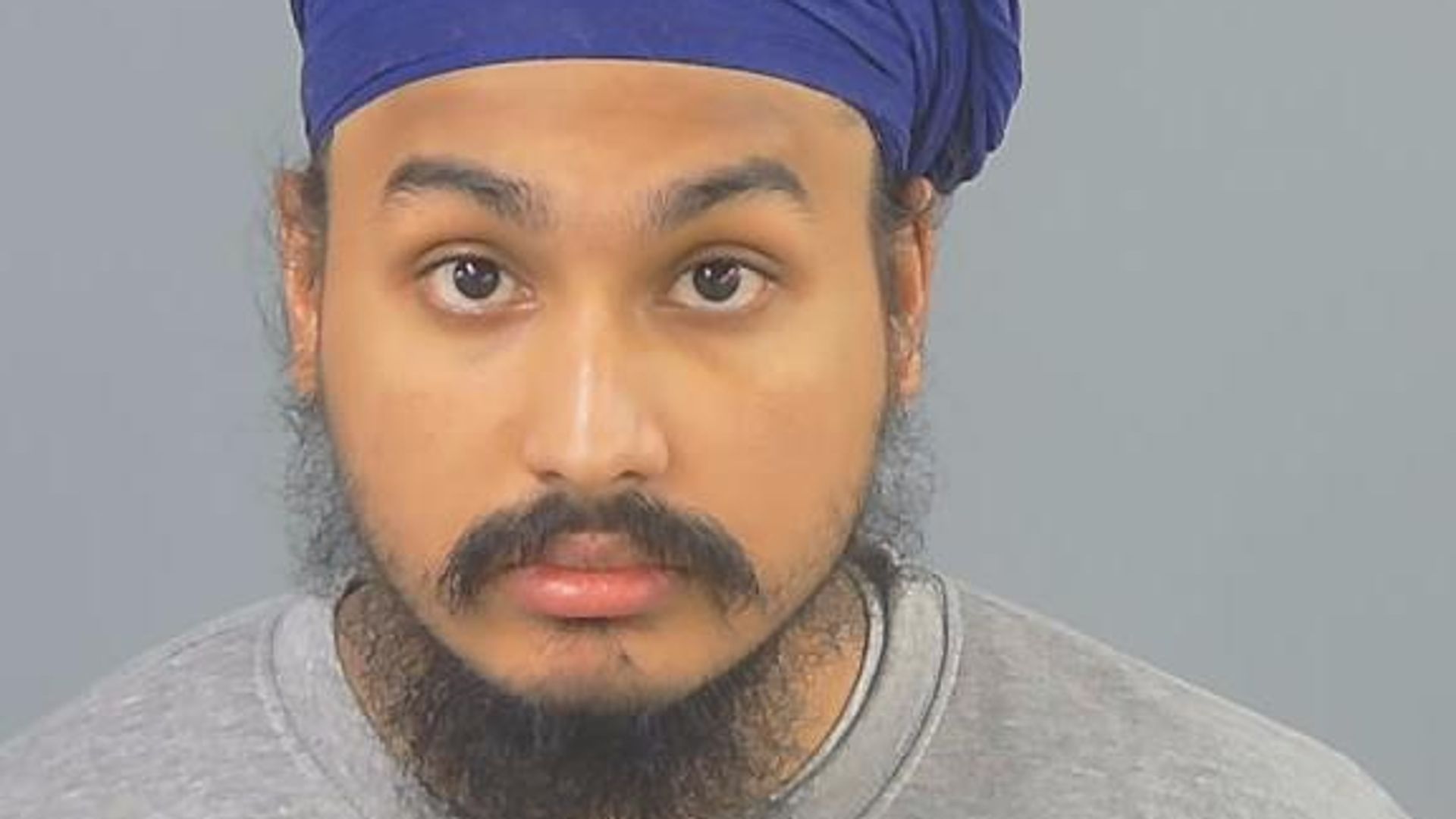
Vickrum Digwa seeks permission to appeal against Henry Nowak murder conviction
His lawyers say the application challenges the conviction. A separate sentencing judgment increased the minimum term of his life sentence from 21 to 25 years.
L 0% · C 50% · R 50%4 outletsBlindspot: few left-leaning outlets covering this
Some spin · most spun: Daily Mail 42/100 See every outlet’s spin ↓Photo as used by Sky News for “Henry Nowak killer in bid to appeal against murder conviction”How Sky News framed it: Sky News uses a close-up portrait of Digwa against a plain background. It puts the convicted man at the centre of the story rather than showing the victim or court proceedings.
Digwa’s solicitors announced that they had lodged the application. The Court of Appeal’s decision earlier in November dealt with the minimum term, a different issue.
How the coverage differs
The three full articles discuss proposed grounds for challenging the conviction, while Sky News provides only a headline and summary. The Daily Mail explicitly says the Attorney General argued that the original term was unduly lenient; GB News quotes the Attorney General's representative without clearly explaining the separate review request, and BBC News does not mention it. BBC News gives the fullest account of the sentencing starting point and increase, while the Daily Mail alone discusses Digwa's mother's expected release and quotes Nowak's parents on it.
Vickrum Singh Digwa has applied for permission to appeal against his conviction for the murder of Henry Nowak, his solicitors have said. In a statement reported on 17 November, Imran Khan and Partners said the application concerns whether the conviction is safe. The firm distinguished that application from separate proceedings over the length of the minimum term Digwa must serve.S2S3
Nowak was 18 when he was fatally stabbed in Southampton on 3 December 2025. Digwa was convicted of his murder after a trial at Southampton Crown Court. On 1 June 2026 the judge imposed a life sentence and set a minimum term of 21 years, less time already spent in custody on remand.R1
Why it matters
The Court of Appeal had two sentencing decisions to make earlier this month. Digwa wanted permission to challenge the original term as excessive. The Attorney General sought a review on the ground that it was unduly lenient. On 5 November the judges refused Digwa permission to appeal against sentence and increased the minimum term to 25 years.R1S4
That ruling explains why a 25-year figure now appears alongside accounts of the new application. It describes the minimum term attached to the life sentence. The appeal judges were deciding the appropriate punishment after conviction. They were not ruling on the application against conviction that the solicitors have now announced.R1S2S3
The background
In their written reasons on sentence, the judges considered the starting point and the adjustments that should follow it. They upheld the original judge’s approach to the starting point. They also concluded that the way the knife was used warranted a substantial increase. Their assessment allowed for Digwa’s age, his previous good character and the absence of premeditation. The original sentencing order also imposed a concurrent two-year term for an offence of having a bladed article.R1
The judges put the appropriate minimum term before mitigation at no less than 27 years. Taking the mitigating factors together brought their assessment to at least 25. They also addressed Digwa’s challenge to the trial judge’s finding that his allegation of racial abuse was false. They explained that deciding that dispute was unnecessary to determine the minimum term.R1
What happens next
Under the published procedure for Crown Court cases, a person seeking to challenge a conviction must first apply to the Criminal Division of the Court of Appeal for permission. The solicitors’ statement confirms that they have lodged an application. It does not announce a grant of permission, a hearing date or any change to the verdict reached at trial.R2S2S3
Fact check: every point labelled
What is confirmed, what is only reported, and what is claim or speculation. Every point links to its source.
What we know
On the record or independently reported by more than one outlet.
confirmedNowak was 18 when he was fatally stabbed in Southampton on 3 December 2025.R1
confirmedDigwa was convicted of his murder after a trial at Southampton Crown Court.R1
confirmedOn 1 June 2026 the judge imposed a life sentence and set a minimum term of 21 years, less time already spent in custody on remand.R1
confirmedThe Court of Appeal had two sentencing decisions to make earlier this month.R1S4
confirmedDigwa wanted permission to challenge the original term as excessive.R1S4
confirmedThe Attorney General sought a review on the ground that it was unduly lenient.R1S4
confirmedOn 5 November the judges refused Digwa permission to appeal against sentence and increased the minimum term to 25 years.R1S4
confirmedThat ruling explains why a 25-year figure now appears alongside accounts of the new application.R1S2S3
confirmedIt describes the minimum term attached to the life sentence.R1S2S3
confirmedThe appeal judges were deciding the appropriate punishment after conviction.R1S2S3
confirmedThey were not ruling on the application against conviction that the solicitors have now announced.R1S2S3
confirmedIn their written reasons on sentence, the judges considered the starting point and the adjustments that should follow it.R1
confirmedThey upheld the original judge’s approach to the starting point.R1
confirmedThey also concluded that the way the knife was used warranted a substantial increase.R1
confirmedTheir assessment allowed for Digwa’s age, his previous good character and the absence of premeditation.R1
confirmedThe judges put the appropriate minimum term before mitigation at no less than 27 years.R1
confirmedTaking the mitigating factors together brought their assessment to at least 25.R1
confirmedThey also addressed Digwa’s challenge to the trial judge’s finding that his allegation of racial abuse was false.R1
confirmedThey explained that deciding that dispute was unnecessary to determine the minimum term.R1
confirmedUnder the published procedure for Crown Court cases, a person seeking to challenge a conviction must first apply to the Criminal Division of the Court of Appeal for permission.R2S2S3
confirmedThe solicitors’ statement confirms that they have lodged an application.R2S2S3
confirmedIt does not announce a grant of permission, a hearing date or any change to the verdict reached at trial.R2S2S3
confirmedThe original sentencing order also imposed a concurrent two-year term for an offence of having a bladed article.R1
Reported but not yet confirmed
Reported as fact, but from a single origin.
reportedImran Khan and Partners: Vickrum Singh Digwa has applied for permission to appeal against his conviction for the murder of Henry Nowak, his solicitors have said.S2S3
reportedImran Khan and Partners: In a statement reported on 17 November, Imran Khan and Partners said the application concerns whether the conviction is safe.S2S3
reportedImran Khan and Partners: The firm distinguished that application from separate proceedings over the length of the minimum term Digwa must serve.S2S3
Still unknown
Whether the court will give permission to appeal against conviction.
Key questions
What has been lodged?
The solicitors say they have lodged an application challenging the safety of the conviction.S2S3
What did the earlier judgment decide?
The Court of Appeal increased the minimum term from 21 to 25 years.R1
Has permission to appeal the conviction been announced?
The solicitors announced an application. Their statement gives no decision on permission.S2S3
Spin meter
How each outlet framed this story, scored on the wording and choices in that article, not on the outlet’s reputation.
Headlines compared: All four headlines lead on Digwa's attempt to challenge his conviction. The Daily Mail adds that he stabbed the student to death, while Sky News and BBC News use shorter formulations; GB News and the Daily Mail name Digwa.
Daily MailFraming: Not political · Spin 42/100 · Headline matches story: yes
“Henry Nowak killer Vickrum Digwa applies to appeal against murder conviction after he stabbed student to death”
Straight reportingHeavy spin
The Daily Mail combines the conviction application with graphic details, the victim's family's reactions and criticism of an early-release decision.
Why? 3 framing techniques
emotional appealI have to go to Henry’s grave to see Henry. The mother's words convey her grief while shifting attention from the conviction application to the release of Digwa's mother.
emphasishandcuff the teenager as he lay dying Repeated descriptions of Nowak's treatment emphasise the distressing circumstances of the killing alongside the new application.
opinion as factHe then falsely claimed Mr Nowak had racially abused him The claim is stated conclusively without noting that the sentencing appeal judges did not need to resolve that dispute.
GB NewsFraming: Not political · Spin 38/100 · Headline matches story: yes
“Henry Nowak's killer Vickrum Digwa applies to appeal murder conviction”
Straight reportingHeavy spin
GB News foregrounds the conviction application and the brutality of the killing, while giving a potentially misleading account of the sentencing proceedings.
Why? 3 framing techniques
emphasisafter he tried to appeal his original 21-year sentence The repeated emphasis on Digwa's challenge obscures the Attorney General's separate request for an increase.
omission The article quotes the Attorney General's representative but does not clearly explain that the Attorney General sought the review that led to the increase.
opinion as factHe then lied to the police This presents the disputed allegation of racial abuse as conclusively false without noting that the sentencing appeal judges considered resolving that dispute unnecessary.
BBC NewsFraming: Not political · Spin 20/100 · Headline matches story: yes
“Henry Nowak killer applies to appeal against conviction”
Straight reportingHeavy spin
BBC News focuses on the proposed conviction grounds and the legal reasoning behind the increased minimum term.
Why? 2 framing techniques
omission The account of the sentencing decision does not mention that the Attorney General sought an increase on the grounds of undue leniency.
omission The sentencing explanation does not include the appeal judges' allowance for Digwa's age and previous good character.
Sky NewsFraming: Not political · Spin 5/100 · Headline matches story: yes
“Henry Nowak killer in bid to appeal against murder conviction”
Straight reportingHeavy spin
Sky News presents the application briefly, identifying Digwa by his conviction.
Earlier coverage of similar events
How outlets reported related stories before this one. Compare for yourself.
Help power NoDirection. Read without adverts.Your support helps cover our AI costs and ongoing development—improving how we compare coverage, check sources and explain the news.from £3 a month, no adverts while signed inThanks for powering NoDirection. You’re reading without adverts.
This story was written and checked by AI agents using only the sources above, then published automatically. Facts are labelled by how well they are supported. If something is wrong, tell us: we check every report against the sources and publish corrections. Editorial policy